Vuelta Femenina 2026: Route

First published on 1 May 2026
Race data: Sunday 3 May – Saturday 9 May
Race type: Grand Tour for women
Key stages: 6 and 7
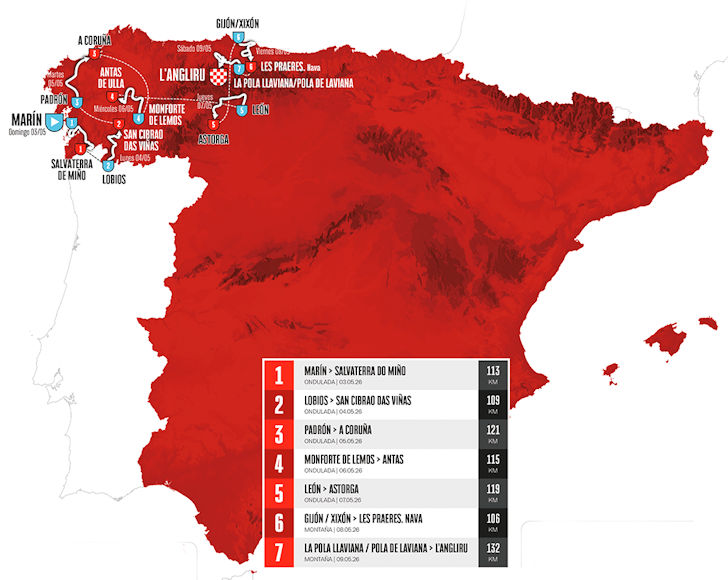
Stage-by-stage breakdown of the 2026 Vuelta Femenina
[click on the italicised links for detailed stage descriptions]
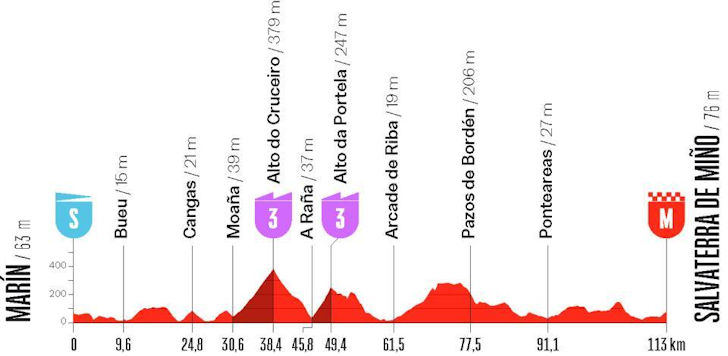
Stage 1 – 113.9 kilometres, 1,843 metres of elevation gain
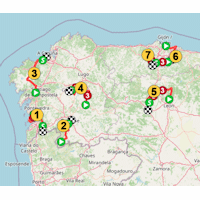
The women’s Vuelta opens with four days in Galicia. Stage 1 is a hilly race from Marín to Salvaterra de Miño. The toughest climbs come far from the finish, and from there it is mostly a rolling run to the line. The final kilometre ramps up at 6% for 400 metres before levelling out.
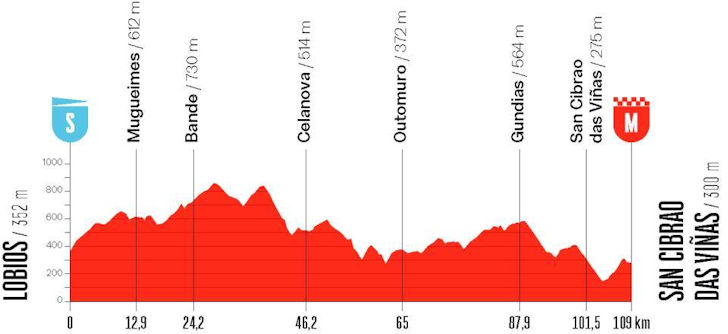
Stage 2 – 109.8 kilometres, 1,912 metres of elevation gain
The race continues in the same vein on the second day. The hills between Lobios and San Cibrao das Viñas precede a challenging finale. This time, the final summit comes just before the finish, after which the stage ends with a short descent and a flat final kilometre.
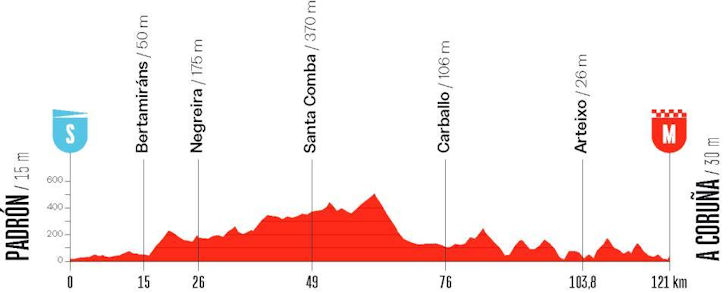
Stage 3 – 121.2 kilometres, 1,867 metres of elevation gain
Between Padrón and A Coruña, the riders face a pleasantly rolling route. There is a good chance the pure sprinters will come to the fore when the race finishes right next to the Estadio Municipal de Riazor, the home of Deportivo de La Coruña.
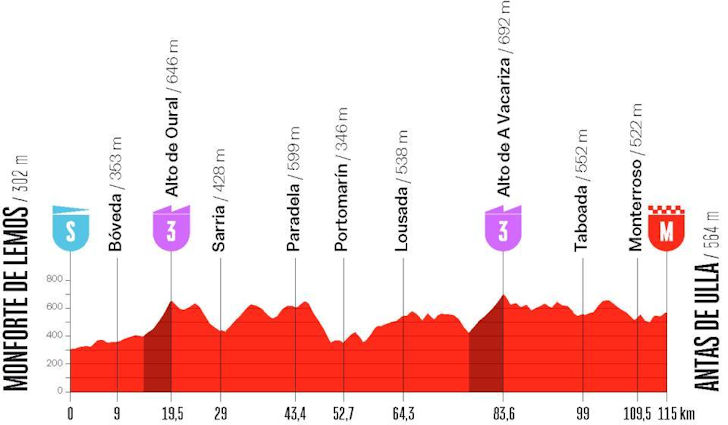
Stage 4 – 115.6 kilometres, 1,784 metres of elevation gain
The final stage in Galicia runs from Monforte de Lemos to a slightly uphill finish in Antas de Ulla. The route looks too tough for the pure sprinters, but for more resilient riders like Lotte Kopecky and Marianne Vos will have no problem with this kind of terrain.
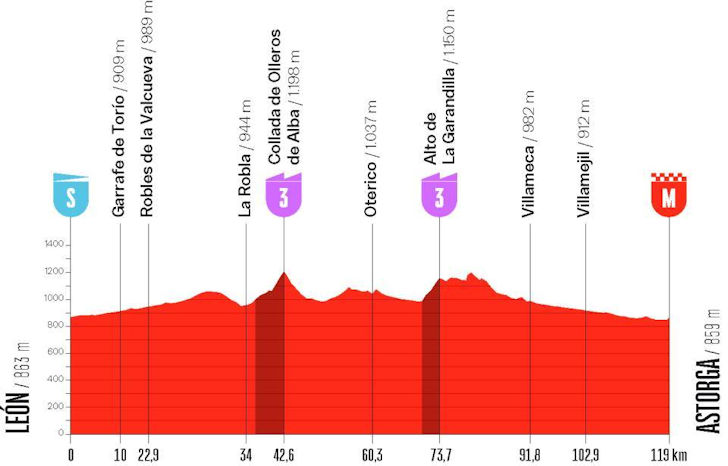
Stage 5 – 119.6 kilometres, 985 metres of elevation gain
At first glance, only crosswinds can spoil the sprinters’ party on day five. The race from León to Astorga is virtually flat, apart from two minor climbs halfway through.
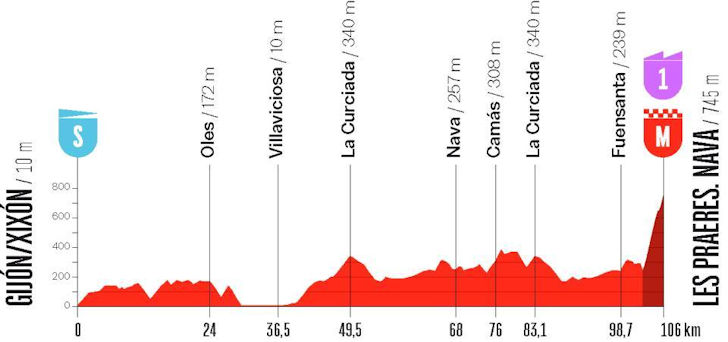
Stage 6 – 106.5 kilometres, 2,029 metres of elevation gain
In the final two days, the climbers and GC riders take centre stage. Both stages take place entirely in Asturias and finish uphill. After a relatively straightforward run-in, stage 6 ends atop the Alto de Les Praeres, a 3.7-kilometre climb averaging 13.4%.
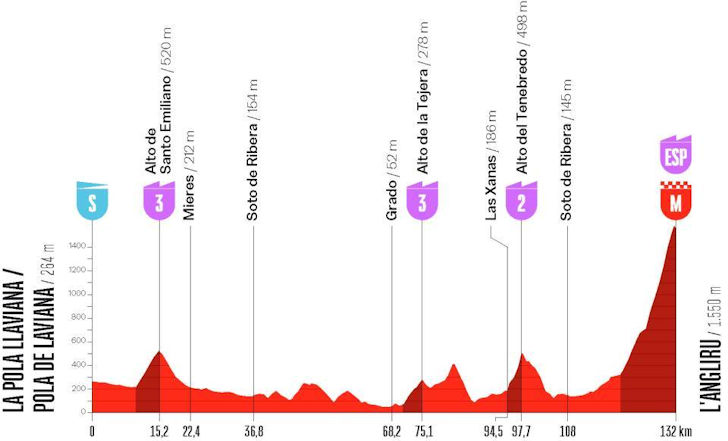
Stage 7 – 132.9 kilometres, 3,504 metres of elevation gain
The Vuelta Femenina concludes with a full-blown monster stage. The final day packs more than 3,500 metres of climbing into 132.9 kilometres and finishes on Spain’s toughest climb: the Angliru. That means grinding up 12.4 kilometres at 9.7%, while the second and third kilometres from the summit rise at almost 16% on average.
Favourites: Kasia Niewiadoma, Anna van der Breggen, Pauline Ferrand-Prévot, Paula Blasi
Title holder: Demi Vollering
Record holders: Demi Vollering (2 wins)
La Vuelta Femenina 2026: route & profiles
Click the images to enlarge

Comment
No comments yet, please share your view!