Vuelta 2025 Route stage 10: Sendaviva - Larra-Belagua

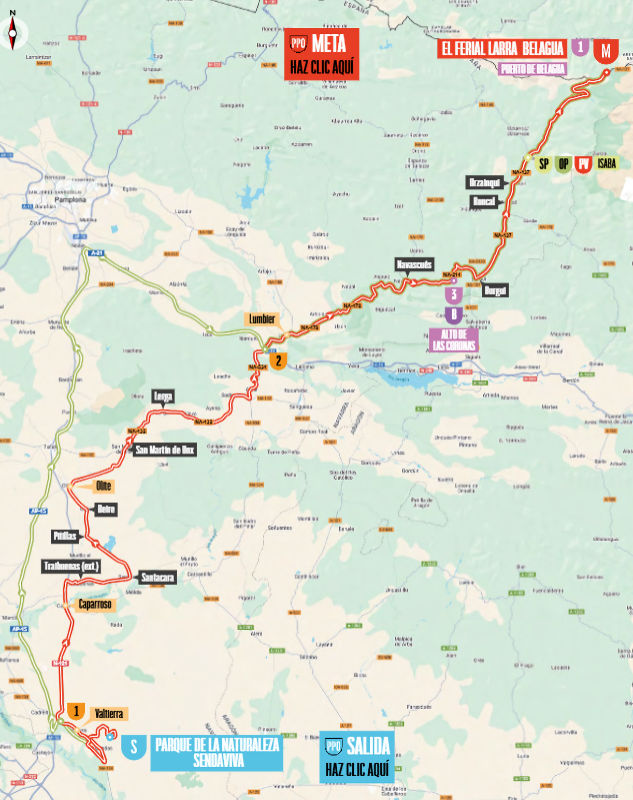
The riders set off from the Parque de la Naturaleza Sendaviva, a unique blend of theme park and zoo. The animals enjoy plenty of space to roam, as Sendaviva covers a sprawling 120 hectares, making it the largest theme park in Spain.
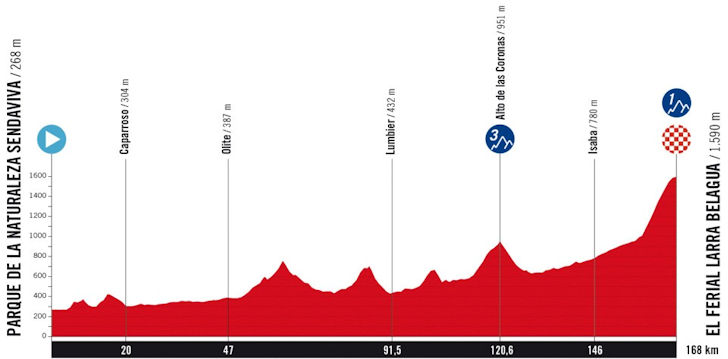
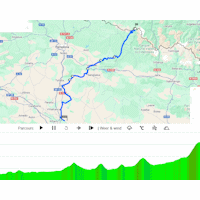
Doubtless, the riders won’t be paying much attention to it. They’ll head north along rolling roads. The Alto de Lerga - 3.7 kilometres at 4.8% - is the most notable obstacle in the early phase of the race. Midway through, they’ll tackle a similar climb - 3.6 kilometres at 5.1% - followed shortly by the Alto de Iso, which ascends for 2.6 kilometres at 4.5%.
None of these climbs are classified. The first KOM of the day is the Alto de las Coronas: 8.3 kilometres at 4.7%, crested after 127.7 kilometres of racing. From there, the riders descend to a gradual incline that stretches for tens of kilometres, eventually transitioning into the climb to the finish line.
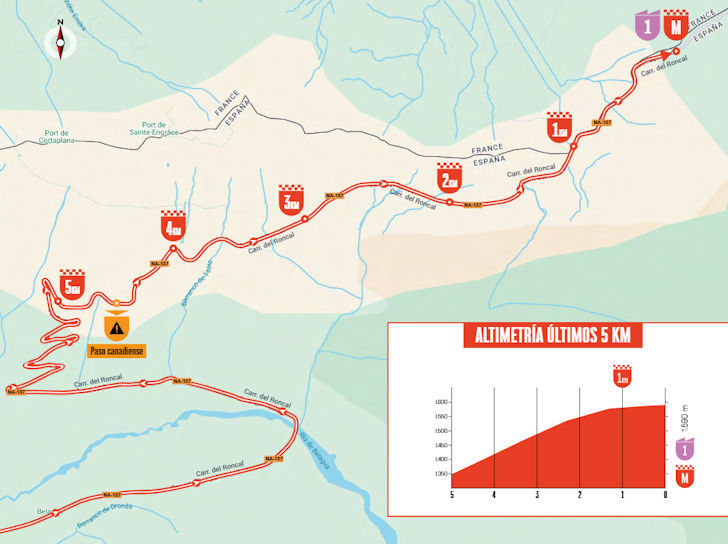
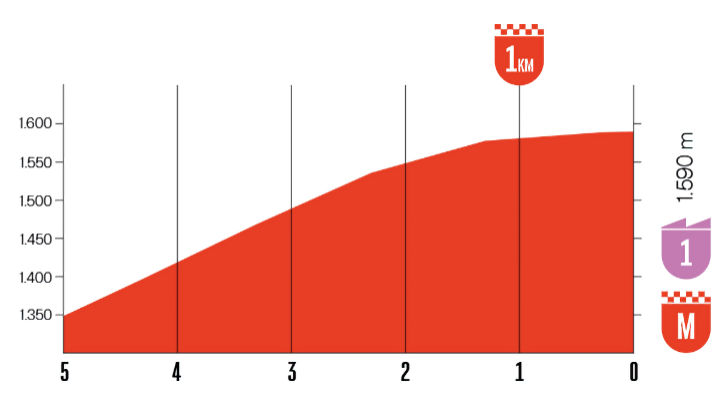
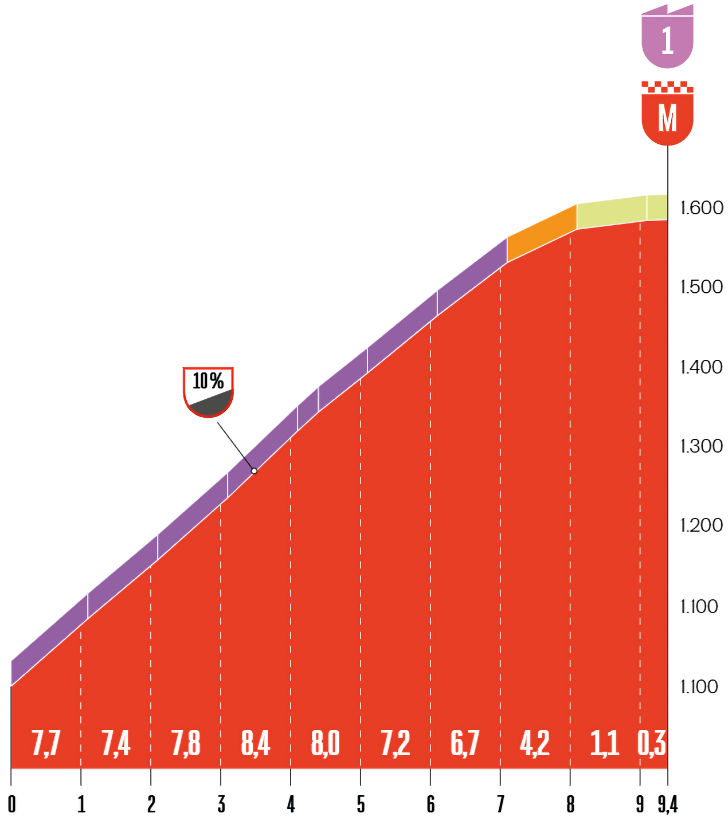
The last 9.4 kilometres take the riders up to the Larra-Belagua ski resort, located at an altitude of 1,590 metres. The average gradient of the finish climb sits at 6.3%. As the riders near the finish, the gradient eases in the final 3 kilometres.
Larra-Belagua, which lies close to the Spanish-French border, also hosted a stage finish two editions ago. Although the approach was different that year, the finish climb is a replica. That day, Remco Evenepoel delivered an unassailable solo victory. The day before, he had spectacularly fallen out of GC contention after losing nearly half an hour on the way to the Tourmalet. But in Larra-Belagua, he bounced back with a dominant win.
The first three riders across the line gain 10, 6 and 4 bonus seconds, while the intermediate sprint atop the Alto de las Coronas carries 6, 4 and 2 seconds.
Fancy riding the route yourself? Download GPX 10th stage 2025 Vuelta a España.
Another interesting read: results 10th stage 2025 Vuelta a España.
Vuelta a España 2025 stage 10: routes, profiles, videos
Click the images to enlarge