Tour de France 2026 Route stage 4: Carcassonne - Foix

Last updated 7 July
Carcassonne has become a familiar and popular stop in recent editions of the Tour. Just last year, Tim Wellens claimed a stage victory here from the breakaway.
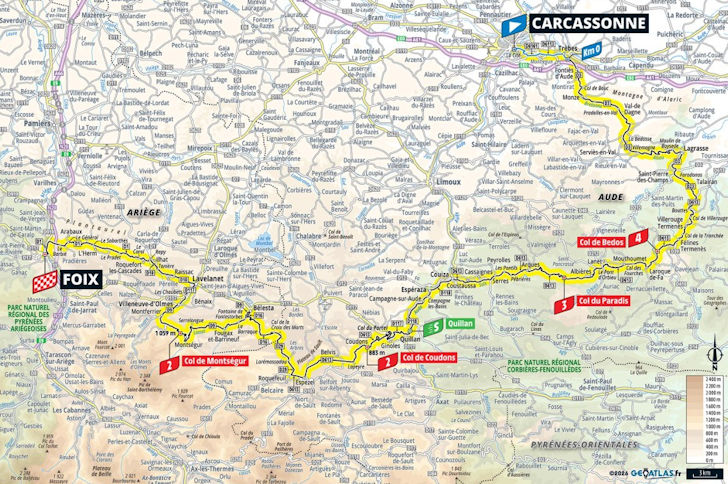
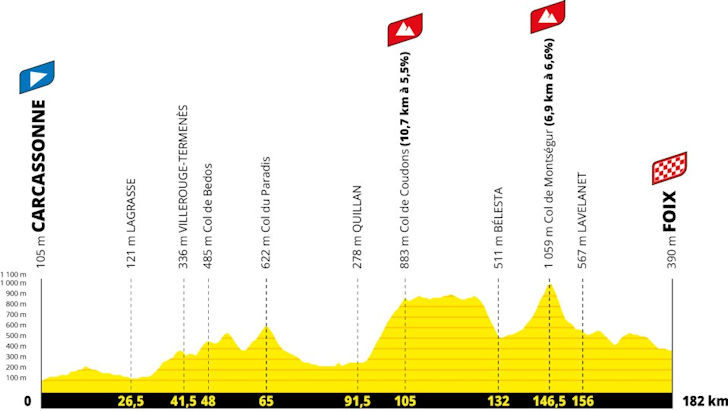
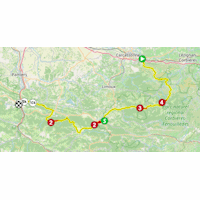
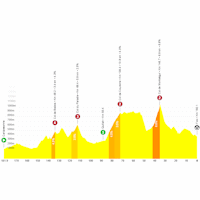
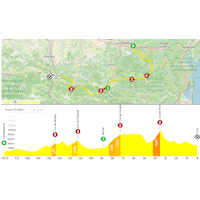
This year, the riders set off from the fortified town. They head towards the Pyrenees, but without venturing into the high mountains. At the same time, the terrain is far from flat. Some 40 kilometres in and two uncategorised climbs in each others wake loom - Col de Villerouge (8.6 kilometres at 3%) and Col de Bedos (3.4 kilometres 4.3%) - before the Col du Paradis throws in 6.4 kilometres 4.1%. Riders chasing KOM points have to wait until after the 100-kilometre mark.
The Col de Coudins offers 10.5 kilometres at an average gradient of 5.5%. After the battle for the polka dots, the route stays on a plateau for around 20 kilometres before descending into Bélesta. The road then rises gradually towards the second categorised climb of the day, the Col de Montségur: 6.9 kilometres at 6.6%. From the summit, 35.5 kilometres remain.
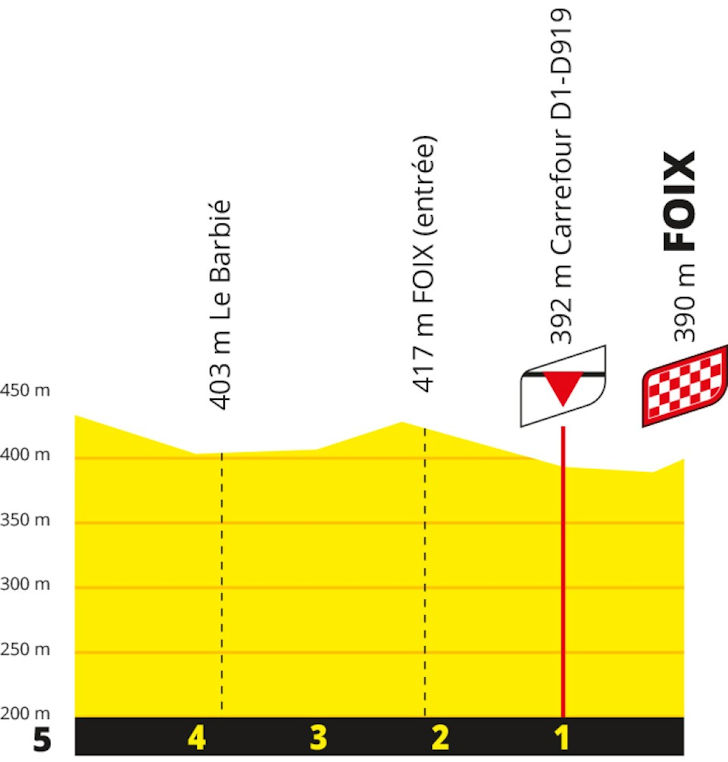
Following the descent, the remainder of the route undulates towards the finish in Foix. It rises slightly at times, but the overall trend is downhill.
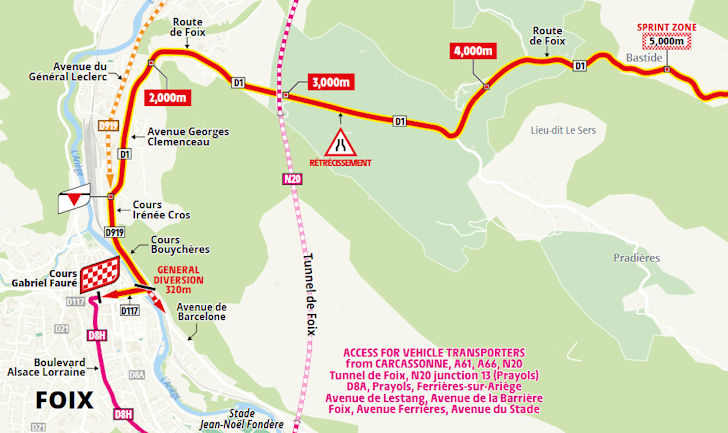
Located at the confluence of the Ariège and Arget rivers, Foix has become a haven for attackers in recent Tour history. Luis León Sánchez (2012), Warren Barguil (2017) and Hugo Houle (2022) all triumphed here from breakaways, although each on a different finale to this year’s.
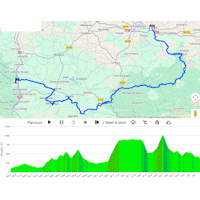
Fancy riding the route yourself? Download GPX 4th stage.
Another interesting read: results 4th stage 2026 Tour de France.
Tour de France 2026, stage 4: routes, profiles, videos
Click the images to enlarge







Comment
No comments yet, please share your view!