Tour de France 2026 Route stage 14: Mulhouse - Le Markstein

Last updated 18 July 2026
The Tour de France last set off from Mulhouse in 2019. That day, the stage finished at La Planche des Belles Filles, where Dylan Teuns outduelled his breakaway companion Giulio Ciccone in a thrilling finale.
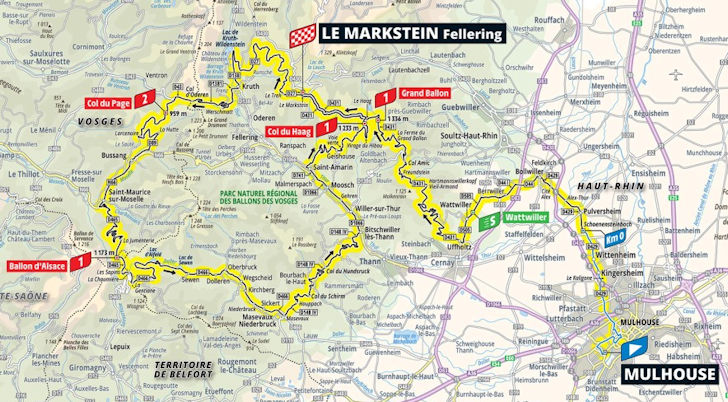
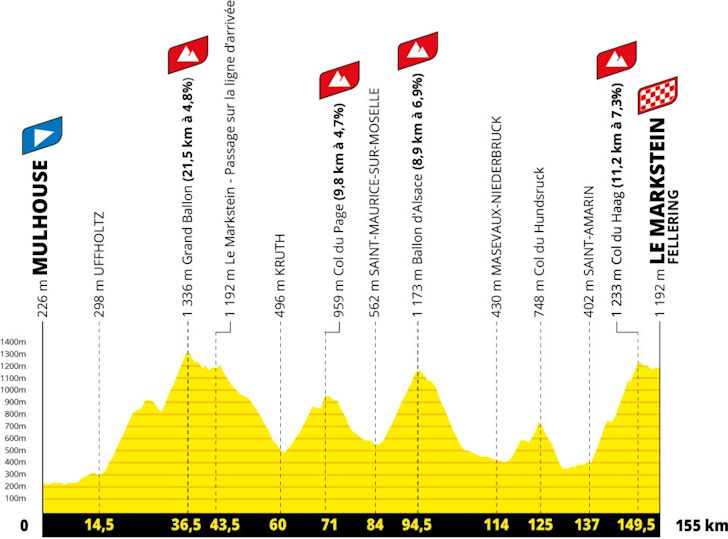
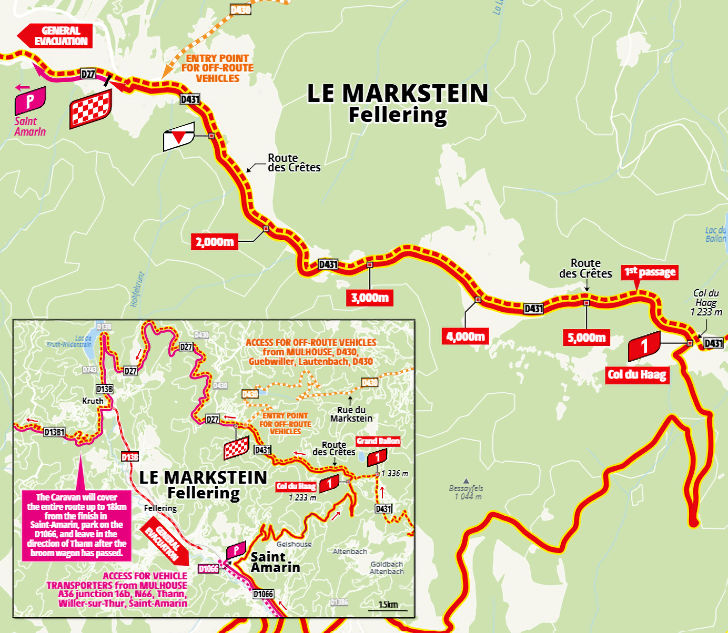
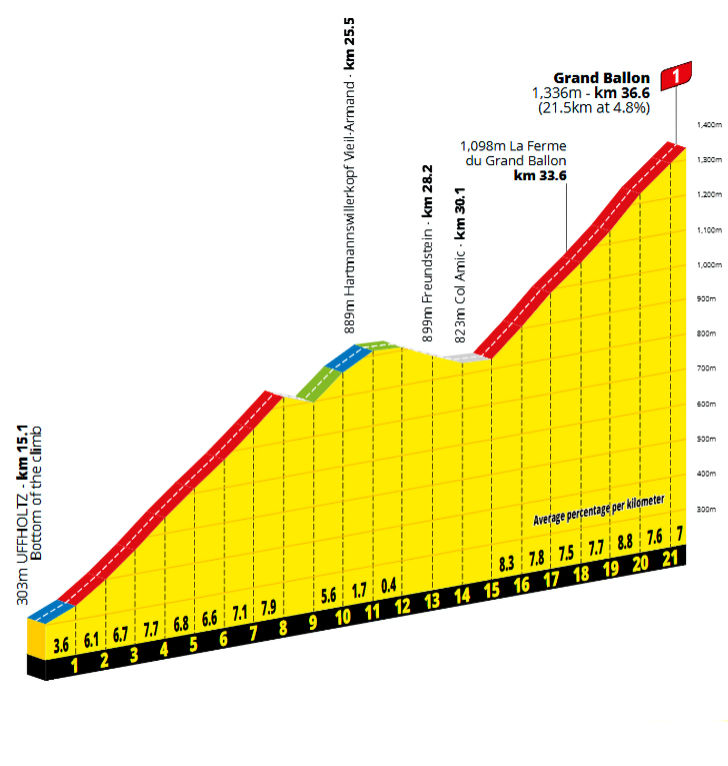
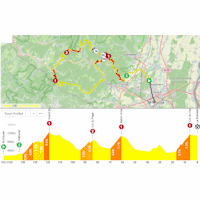
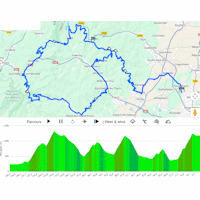
This time, the riders stay much closer to the start — Le Markstein lies less than 50 kilometres away. The route itself is, of course, much longer, though the peloton crosses the finish line fairly early on. After tackling the Grand Ballon — an irregular 21.5-kilometre climb averaging 4.8% — just 36 kilometres into the stage, they reach the finish area for the first time. From there, a loop of just over 111 kilometres awaits.
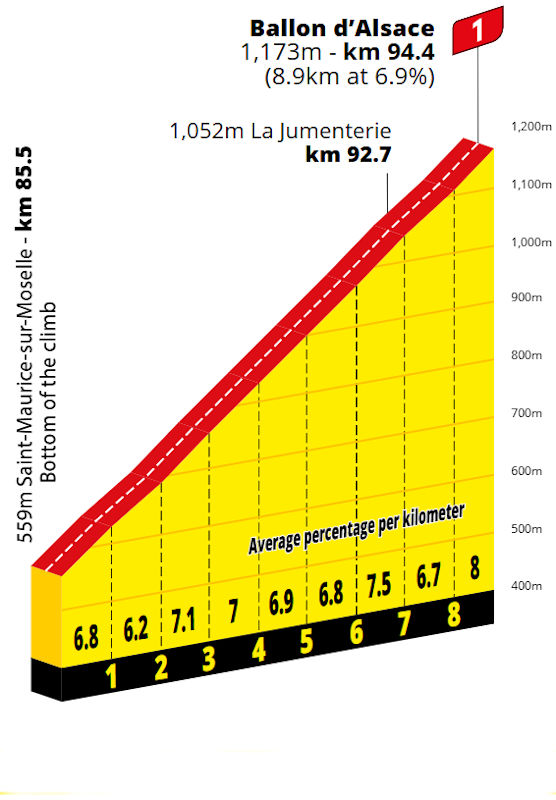
After that first passage, the race dives downhill to Kruth, before the Col du Page provides the easiest classified climb of the day: 9.8 kilometres at 4.7%. Right after the descent comes the Ballon d’Alsace, 8.9 kilometres long at an average of 6.9%. At the summit, there are still 61 kilometres to go.
That phase is unlikely to cause much drama. After the descent, the Col du Schirm (3.7 kilometres at 5.3%) and Col du Hundsruck (3.6 kilometres at 5.2%) are the only hurdles. Everyone will be waiting for the final climb.
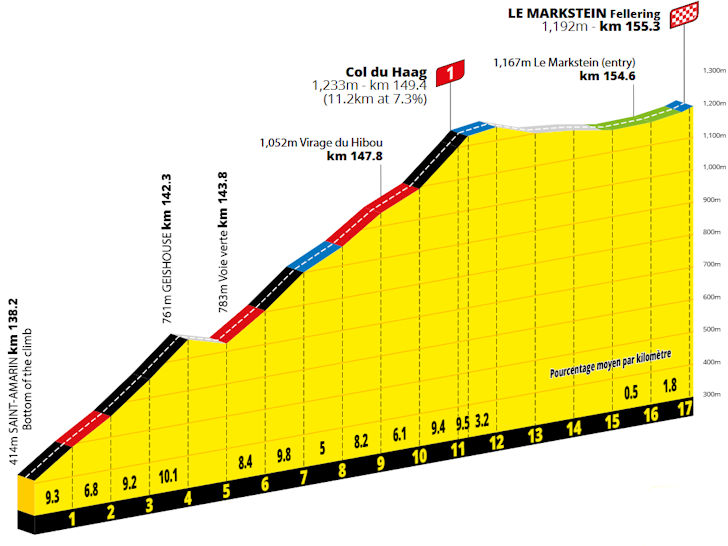
Or rather — the final climbs. First comes the ascent to Geishouse, 4 kilometres at 9%, before a short descent precedes a section at a fairly steady gradient, after which the final kilometre below the summit ramps up to 9.5%. All in all, the Col du Haag is an 11.2 kilometres test with an average gradient of 7.3%. Once over the top, there are still 5.9 kilometres of rolling terrain to the finish.
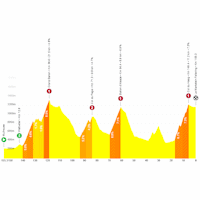
In total, stage 14 of the Tour features 3,800 metres of elevation gain.
The Tour last finished in Le Markstein in 2023, when Tadej Pogacar won a sprint from a select group, while Jonas Vingegaard sealed his overall victory. The approach will be from the opposite side this time.
Fancy riding the route yourself? Download GPX 14th stage.
Another interesting read: results 14th stage 2026 Tour de France.
Tour de France 2026, stage 14: routes, profiles, videos
Click the images to enlarge







Comment
No comments yet, please share your view!