Tour de France 2026 Route stage 20: Bourg d'Oissans - Alpe d'Huez

Last updated 25 July 2026
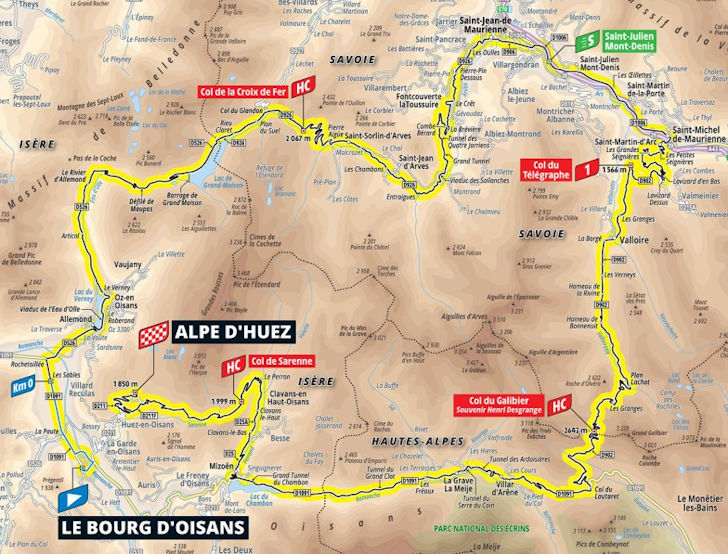
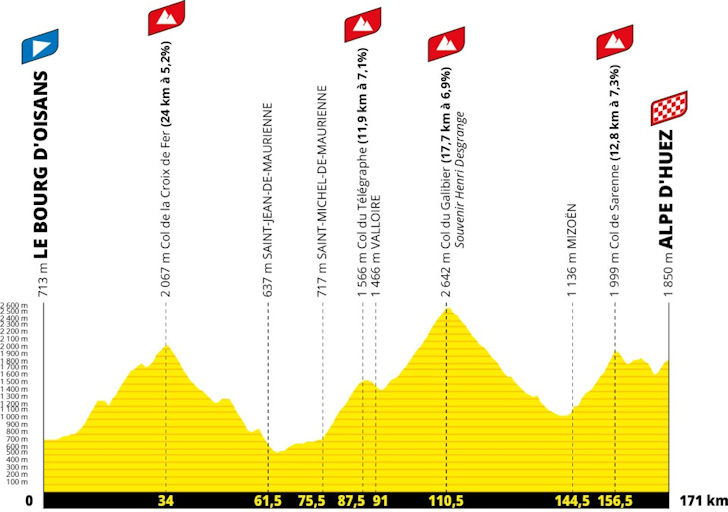
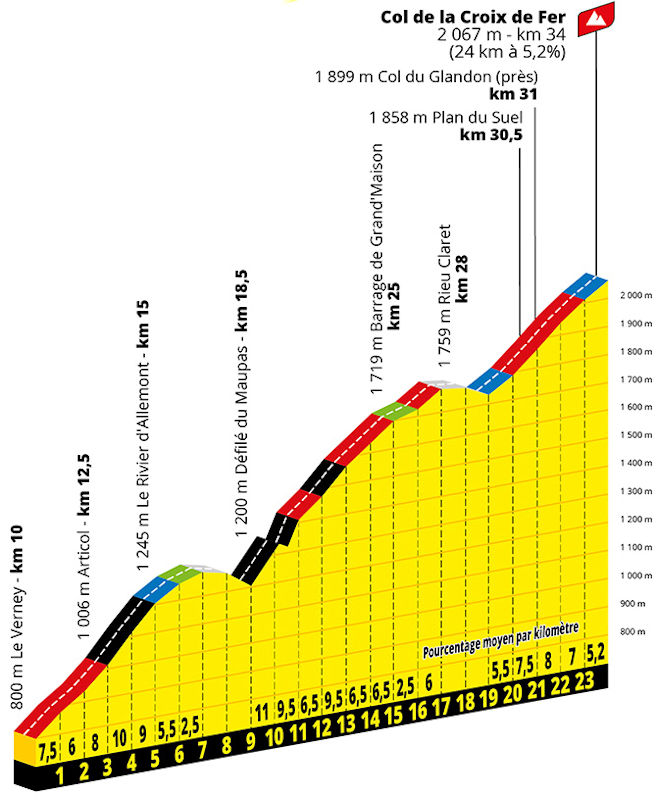
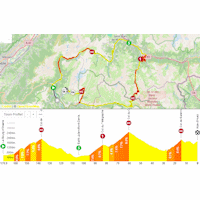
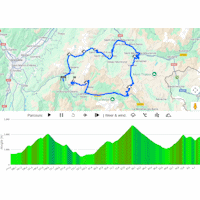
Bourg d’Oisans sits at the foot of the climb to Alpe d’Huez, but also at the foot of the Col de la Croix de Fer. Shortly after the start, the riders head up the latter. It's a tough opener of 24 kilometres at an average gradient of 5.2%. Steeper ramps alternate with short downhill stretches, making it hard to find a rhythm.
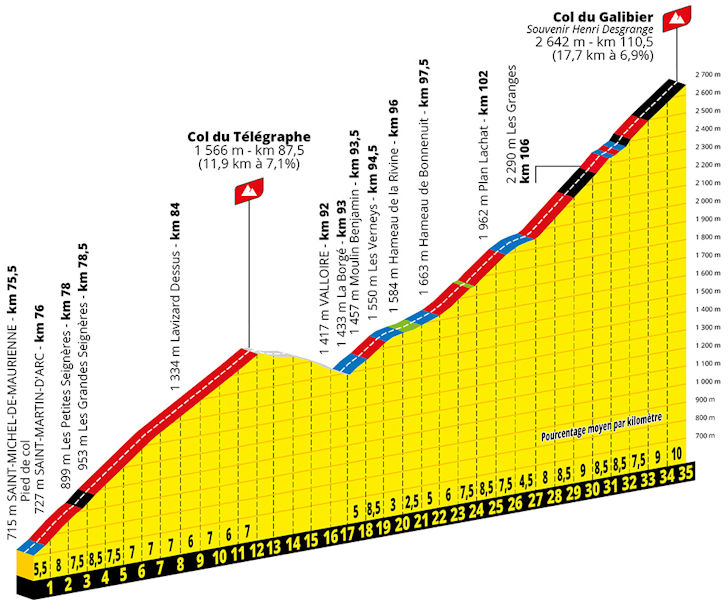
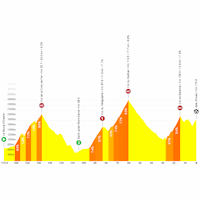
After 34 kilometres, the peloton crests the summit and plunges down towards Saint-Jean-de-Maurienne. Roughly 15 kilometres later, the Col du Télégraphe marks the start of almost 30 kilometres of uphill torture. It's a 11.9 kilometres test at 7.1%, which runs virtually straight onto the Col du Galibier, with barely a descent in between. The Galibier adds another 17.7 kilometres of climbing at 6.9%. The summit tops out at 2,642 metres above sea level, making it the highest point of this Tour.
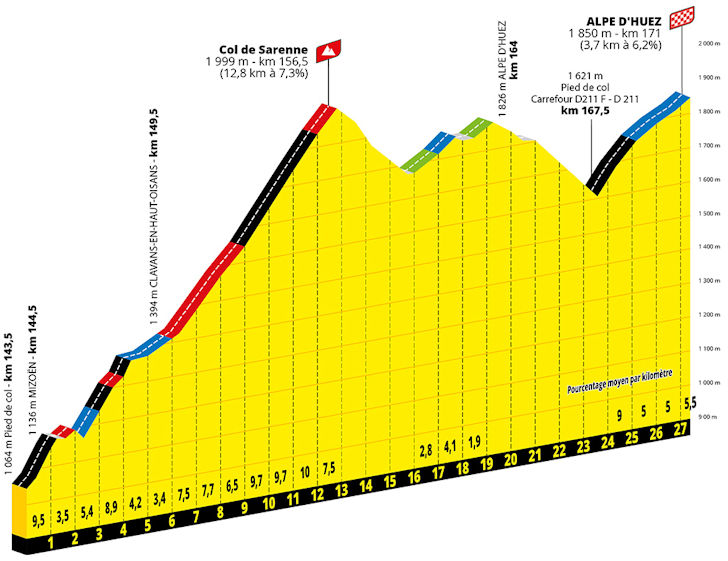
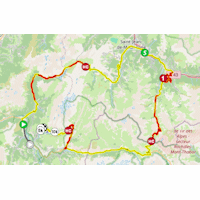
Over the next 30 kilometres, the riders fly downhill towards Mizoën, which lies beside the Lac du Chambon and at the foot of the Col de Sarenne. The 12.8-kilometre climb rises at an average of 7.3%, though the gradient frequently kicks into double digits, especially near the summit.
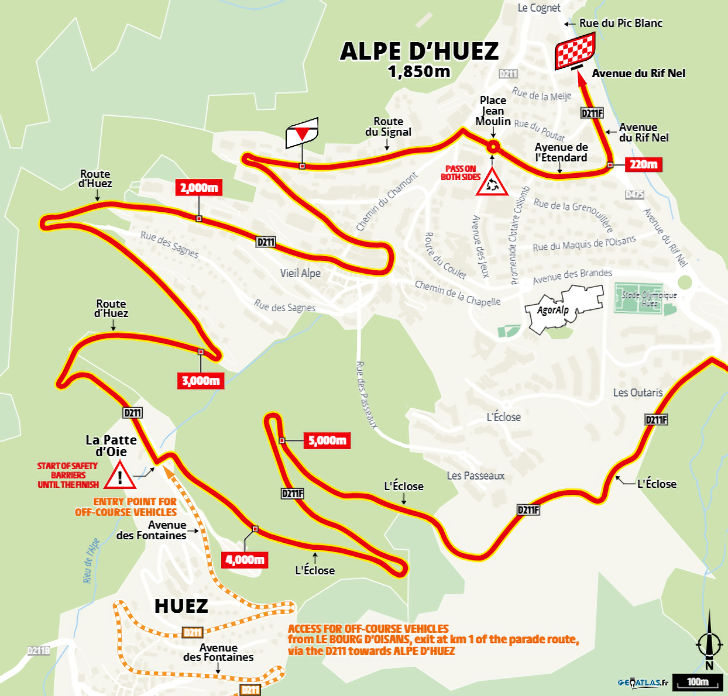
It's 13 kilometres from the Sarenne's summit to Alpe d’Huez. The first part goes downhill, before a rolling uphill section precedes another short drop. The final 3.7 kilometres then climb at an average of 6.2%, with the opening ramps the toughest.
The Col de Sarenne has featured only once before in the Tour, though that time it was tackled from the side that now forms the finale - so, from Alpe d’Huez. After cresting the Sarenne, the riders descended to Bourg d’Oisans and then climbed back up the traditional Alpe d’Huez route. That day, Christophe Riblon enjoyed the moments of his career, soloing to victory 1 minute ahead of Tejay van Garderen. The year was 2013.
Fancy riding the route yourself? Download GPX 20th stage.
Another interesting read: results 20th stage 2026 Tour de France.
Tour de France 2026, stage 20: routes, profiles, videos
Click the images to enlarge






Comment
2 comments
Armin
Dear All the .gpx from stage 20 - seems not to work if I try to download it. Please check Thanks
Harmen Lustig
thank you. should be okay now.