Tour de France 2026: Route
Last updated on 3 July 2026
Race dates: Saturday 4 July – Sunday 26 July
Race type: Grand Tour
Key stages: 6, 14, 15, 16, 18, 19 and 20
Favourites: Tadej Pogacar, Jonas Vingegaard, Paul Seixas
Title holder: Tadej Pogacar
Record holders: Jacques Anquetil, Eddy Merckx, Bernard Hinault, Miguel Indurain (5 overall wins)
Grand Départ
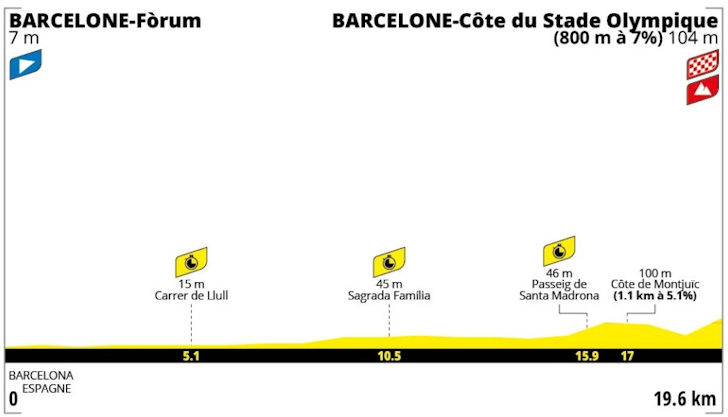
The Tour opens with a team time trial featuring two punchy climbs in the finale. Of particular interest is that individual times count, a concept that has been used in Paris–Nice for several years. GC contenders and puncheurs are expected to drop their teammates on the final ascent in pursuit of the fastest possible time.
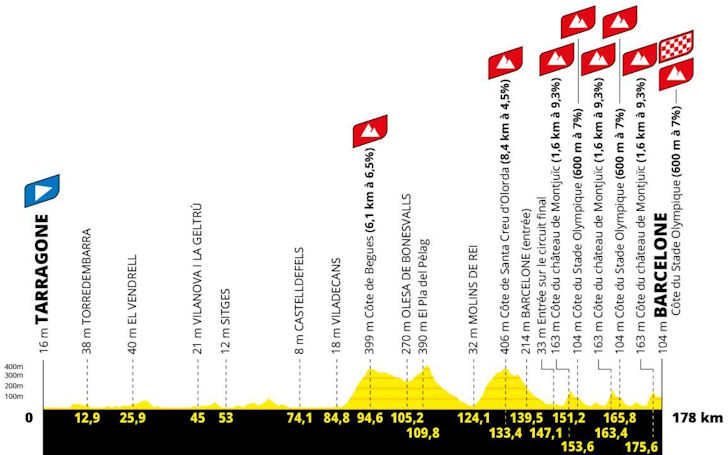
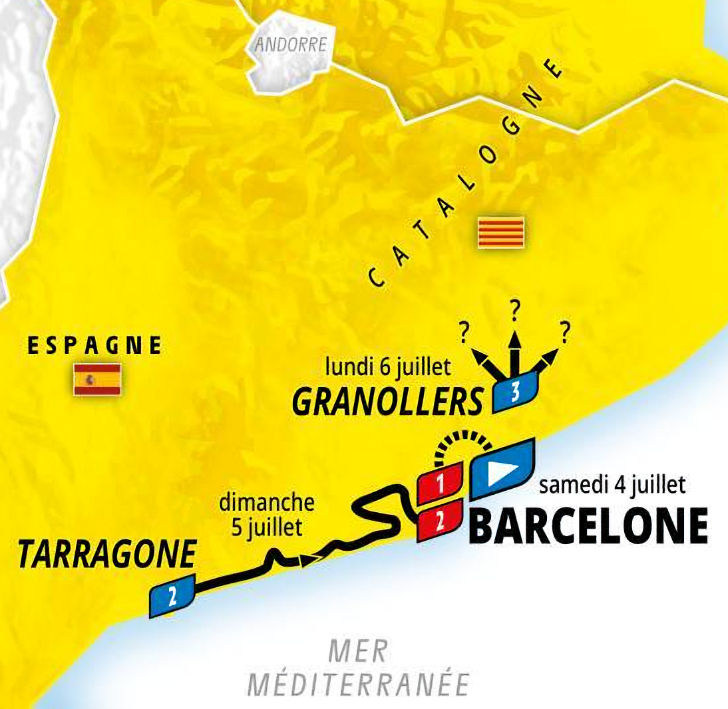
Stage 2 covers 168.5 kilometres from Tarragona to Barcelona. Once again, Montjuïc plays a key role in the finale. In the last 30 kilometres, the riders tackle three hilly laps on a circuit featuring a total of six climbs. Two ramps spice up the final 5 kilometres. The first rises at 9.3% over 1.6 kilometres, and the second at 7% over 700 metres, with the finish located at the top of the latter.
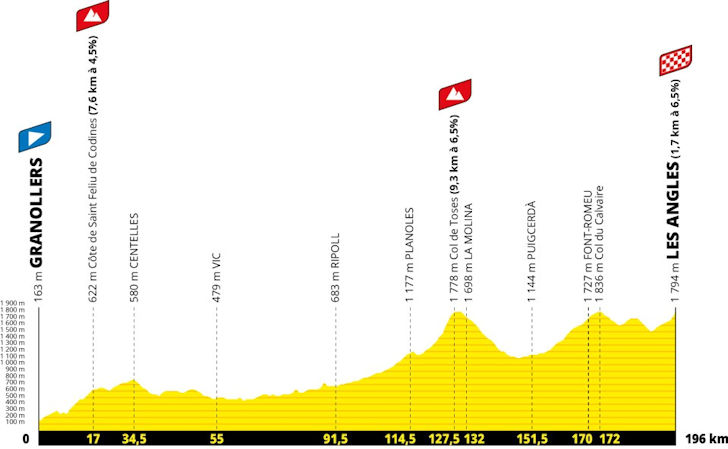
Stage 3 takes the peloton across the Pyrenees into France on a route packed with nearly 4,000 metres of climbing. The finish comes uphill at the Pla del Mir ski resort, just over the Spanish-French border.
Week 1
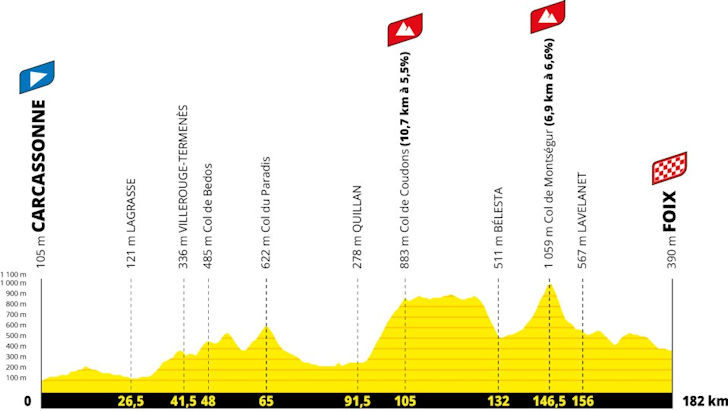
Stage 4 continues over rolling terrain towards Foix, where Hugo Houle triumphed from the breakaway four editions ago. Foix has been escapees’ paradise on several occasions, with the likes of Luis León Sánchez (2012) and Warren Barguil (2017) also claiming victory there.
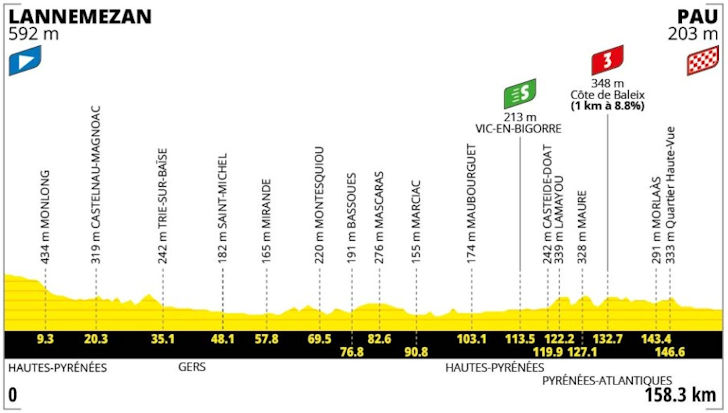
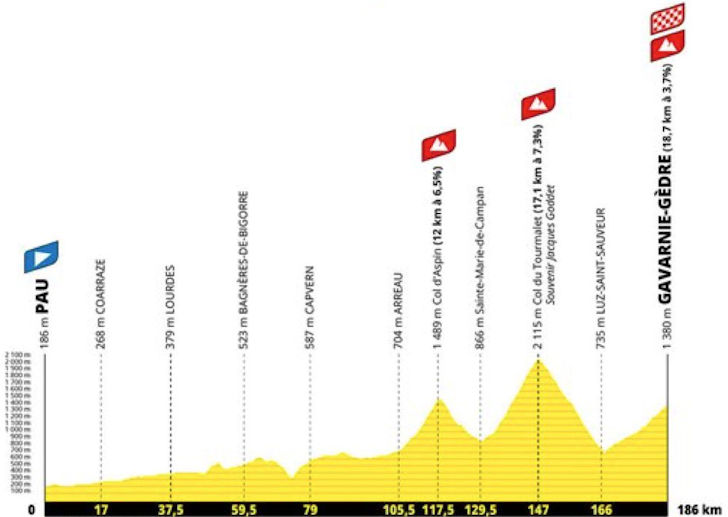
Stage 5 takes the riders across predominantly flat roads from Lannemezan to one of the Tour’s most frequently visited cities: Pau. The next day, the peloton rolls out from there towards the majestic Cirque de Gavarnie – a location La Grande Boucle has never visited before. On the way there, stage 6 includes the Col d’Aspin and Col du Tourmalet.
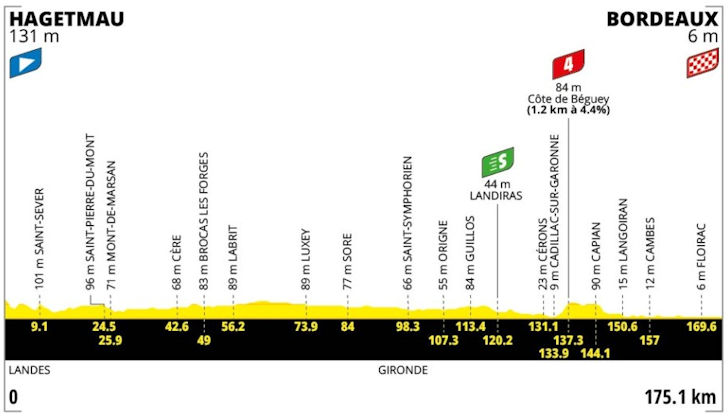
Stage 7 is expected to finish with a sprint in Bordeaux, marking the 83rd time La Grande Boucle visits France’s fifth-largest city. Jasper Philipsen claimed victory there in 2023.
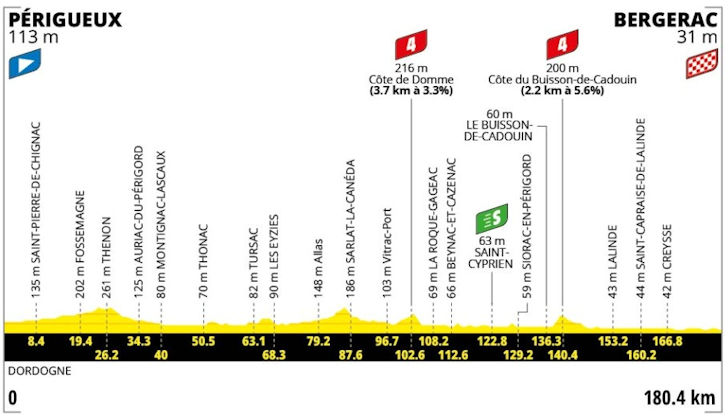
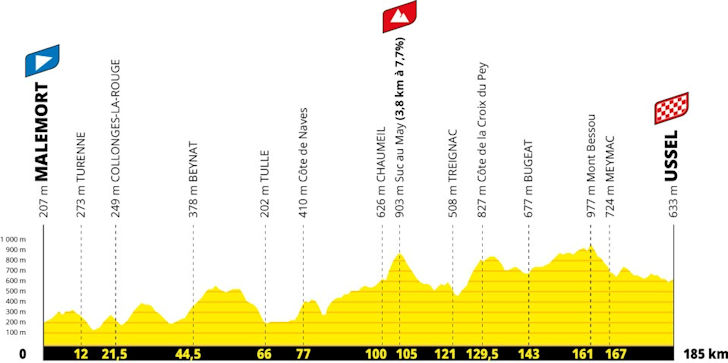
Stage 8 unfolds entirely within the Dordogne, with the riders setting off from Périgueux and finishing in Bergerac. The 9th stage then crosses the Corrèze on more hilly terrain, running from Malemort to Ussel.
Week 2
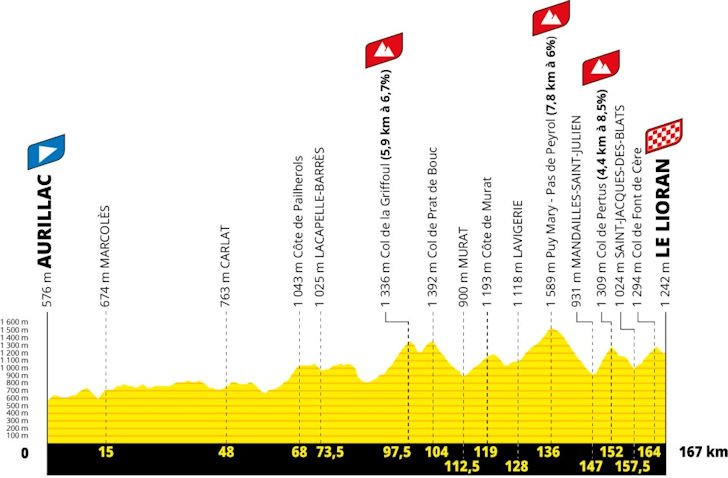
The day after the rest day is Bastille Day, and the riders face a gruelling day of climbing through the Massif Central. Stage 10 finishes in Le Lioran, where Vingegaard edged out Pogacar two editions ago in a photo finish. This year's finale is identical to that of 2024, featuring the Puy Mary Pas de Peyrol and the Col du Pertus.
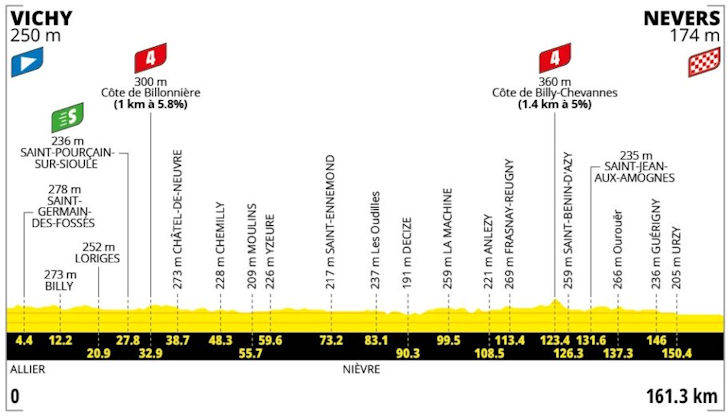
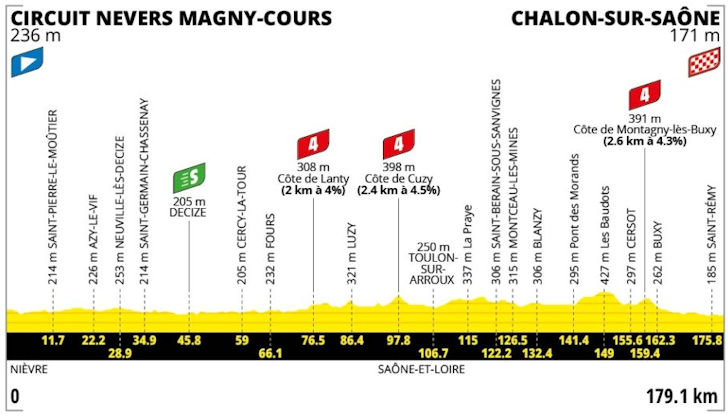
Stage 11 starts in Vichy and finishes in Nevers, followed by stage 12, which runs from the Circuit de Magny-Cours to Chalon-sur-Saône. Both are likely sprint stages.
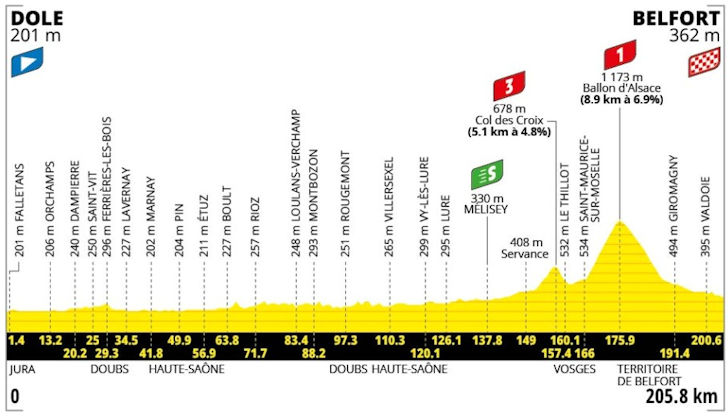
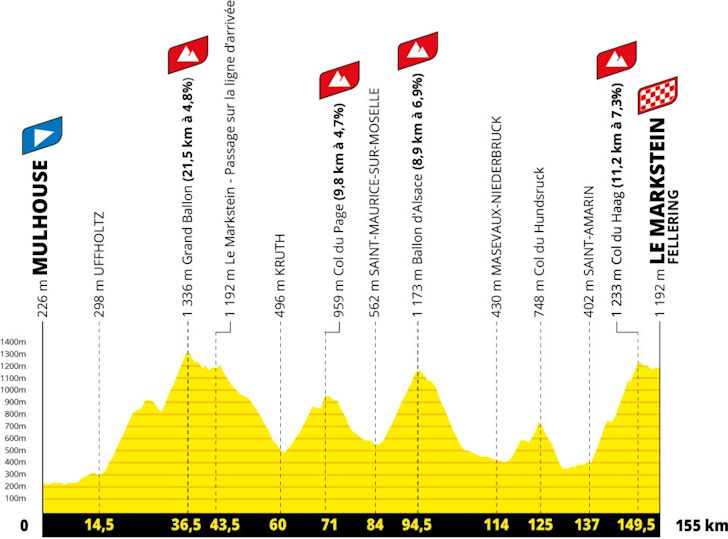
Travelling from Dole to Belfort, the yellow caravan traverses rolling terrain in stage 13, before the Vosges Mountains loom large in stage 14. The riders tackle 3,800 metres of climbing en route to the Le Markstein ski resort.
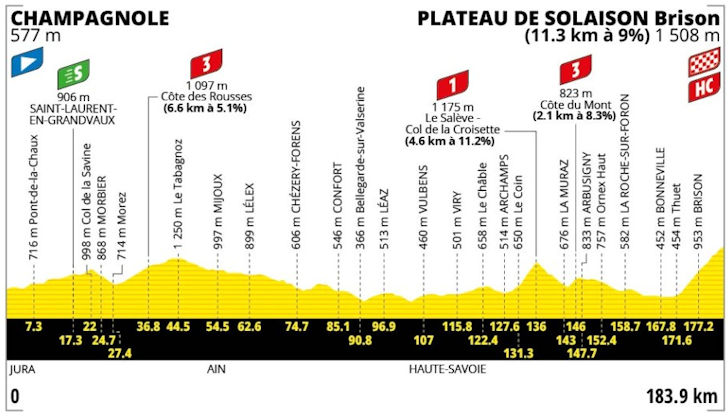
The 15th stage, which is the final stage of the second week, is even tougher. Around 4,000 metres of elevation is on the menu between Champagnole and the Plateau de Solaison, with the final climb stretching 11.3 kilometres at a brutal 9%.
Week 3
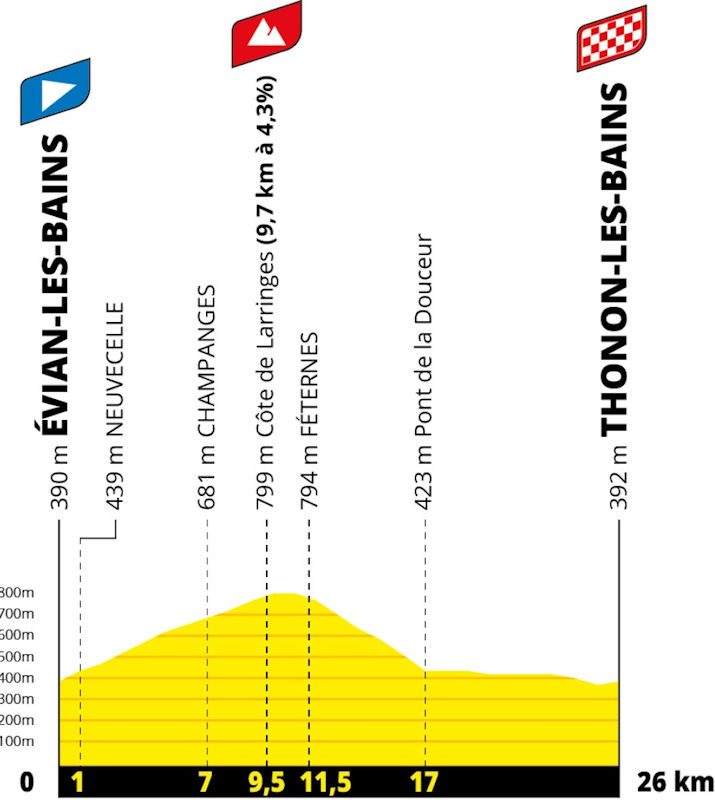
The last week opens with an individual time trial south of Lake Geneva, between Thonon-les-Bains and Évian-les-Bains, before stage 17 offers the last chance for the sprinters. The Tour then heads into the Alps.
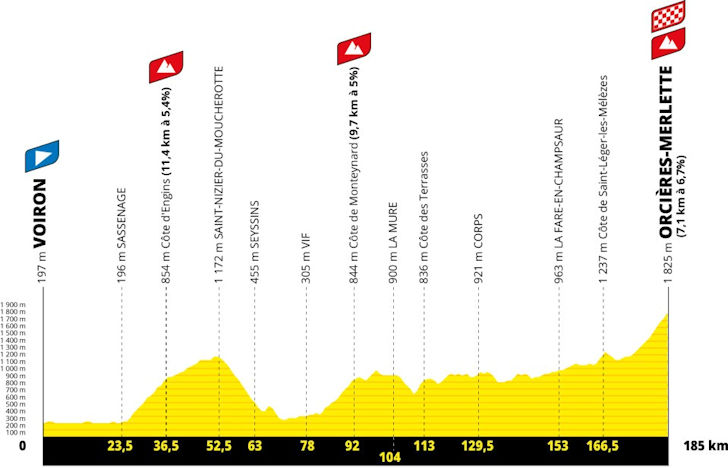
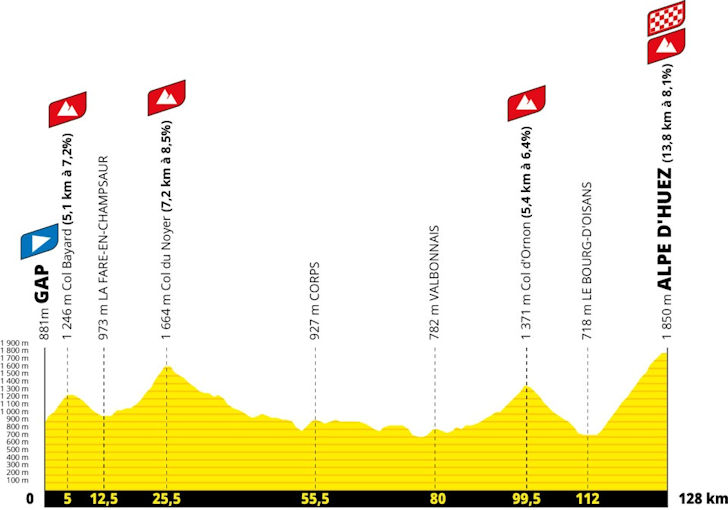
The Alpine stages begin relatively gently with stage 18, which finishes at the ski resort of Orcières-Merlette, featuring a steady 7.1-kilometre climb at 6.7% to the line. Stage 19 ramps up the pressure with a compact mountain stage to Alpe d’Huez, featuring 3,500 climbing metres over 127.9 kilometres. The finish climb twists through 21 hairpins, covering 13.8 kilometres at an average of 8.1%.
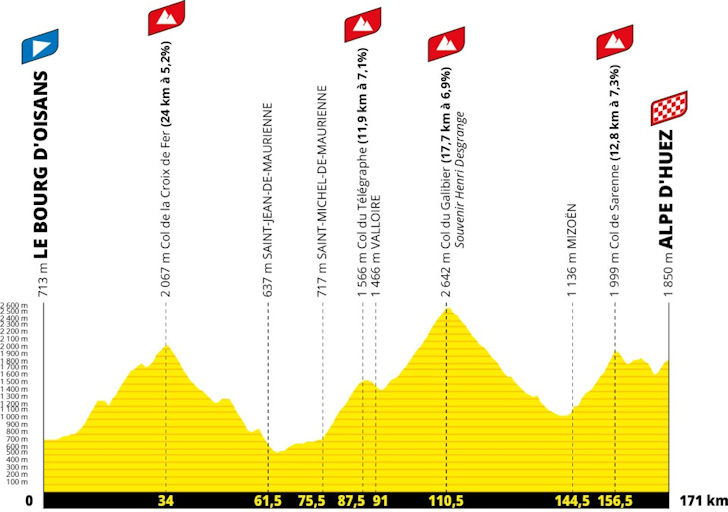
And that's not all, as the Tour tackles Alpe d’Huez twice in 2026. Stage 20 finishes from the opposite side, the Col de Sarenne, rather than via the classic approach. It promises to be an exhausting day, serving up a total of 5,450 metres of elevation gain, as the riders tackle the Col de la Croix de Fer, Col du Télégraphe, and Col du Galibier on the way to the Sarenne.
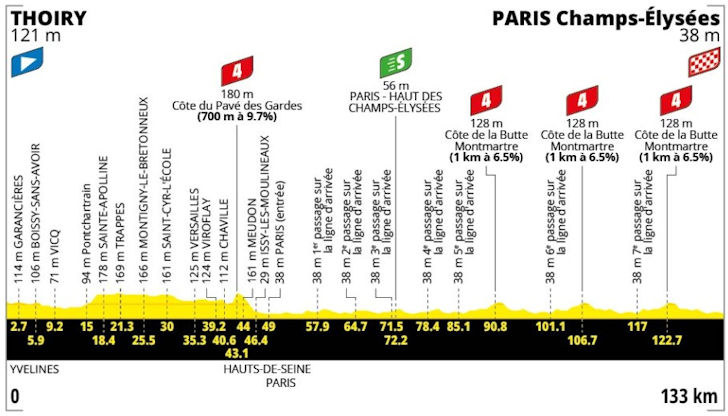
Stage 21 finishes on the Champs-Élysées in Paris, just like last year with the steep cobbles of Montmartre spicing up the finale.
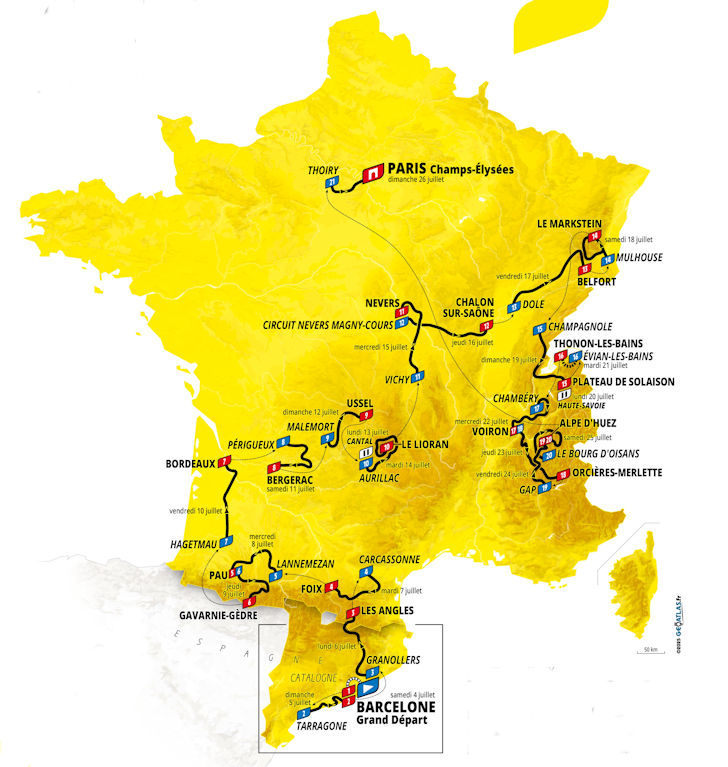
Tour de France 2026: routes, profiles, videos
Click the images to enlarge






Comment
No comments yet, please share your view!