Tirreno-Adriatico 2026: Route
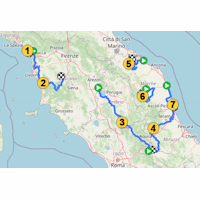
Stage-by-stage breakdown of the 2026 Tirreno-Adriatico
[click the italicised links for detailed stage descriptions]
Stage 1
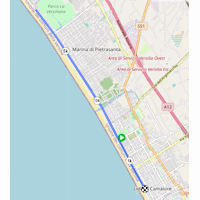
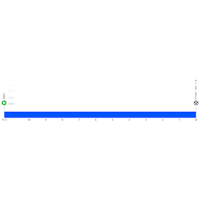
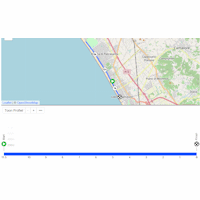
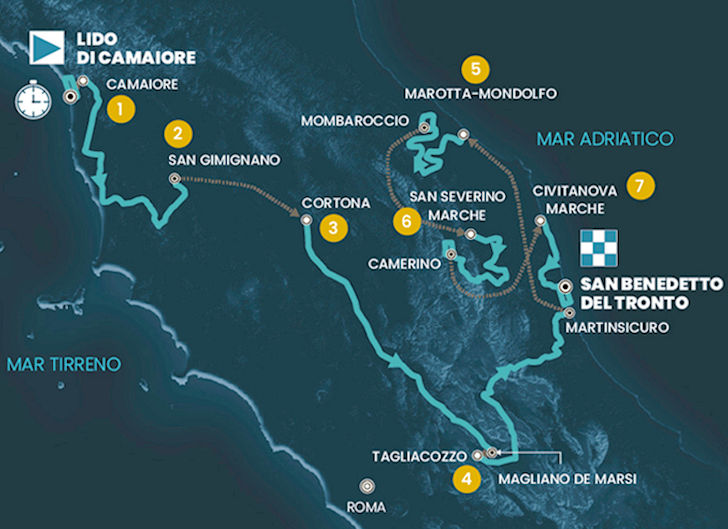
The individual time trial is 11.5 kilometres long and, with just eight metres of elevation gain, it's as flat as it gets. The riders race out and back along a dead-straight road on the Tyrrhenian coast.
Stage 2
After a flat opening phase, the route turns hilly in the final 75 kilometres, while the last kilometre rises at 8% to the line. A further twist is a gravel sector of 5.3 kilometres inside the final 8 kilometres. Stage 2 covers 206 kilometres and features 2,300 metres of climbing.
Stage 3
At 225 kilometres, this one is the longest stage of the week. With 1,850 metres of climbing spread evenly over the course, the fast men will be licking their lips.
Stage 4
Two major ascents in the first half and four smaller climbs in the second — that's stage 4 in a nutshell. The 210-kilometre route, with 2,500 metres of elevation gain, serves up an intriguing finale. A punchy climb of 1.7 kilometres at 9.2% precedes the downhill towards a flat 8-kilometre run-in to the finish.
Stage 5
The Tappa dei Muri is something of a Liège–Bastogne–Liège in miniature. No fewer than 3,900 metres of climbing are packed into the 186-kilometre route. The road goes relentlessly up-and-down all day before the summit of the final climb — 4.2 kilometres at 6.2% — comes just 2 kilometres from the line.
Stage 6
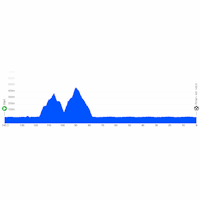
Two races for the price of one. The first half of the stage features an enormous climb, while the second half unfolds on a demanding hilly circuit. The riders rack up 3,900 metres of climbing over 189 kilometres. The finish climb rises for 3.2 kilometres at an average gradient of 8.9%.
Stage 7
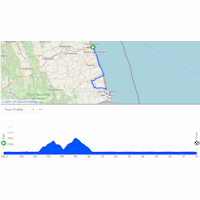
The final test of Tirreno–Adriatico is a 143-kilometre race with only 1,100 metres of climbing — an absolute sprinter’s dream, as Jonathan Milan knows all too well. The Italian has won the past two editions of the traditional closing stage in San Benedetto del Tronto.
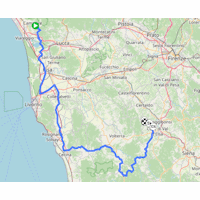
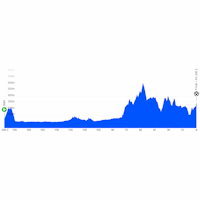
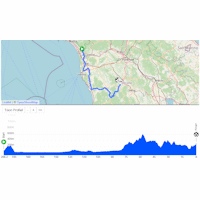
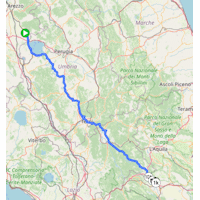
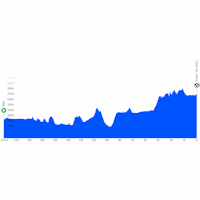
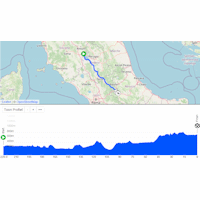
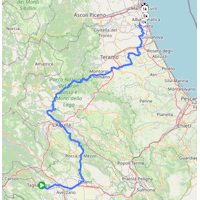
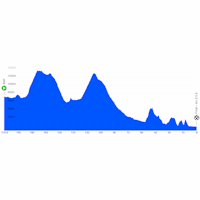
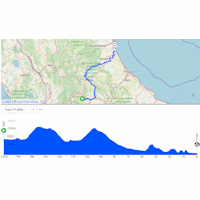
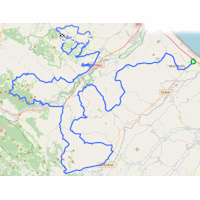
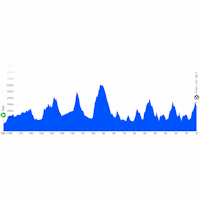
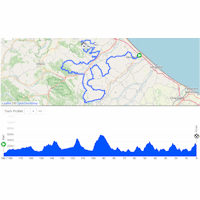
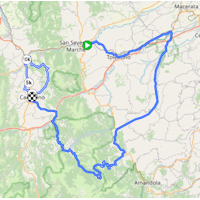
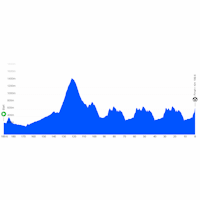
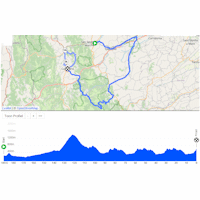
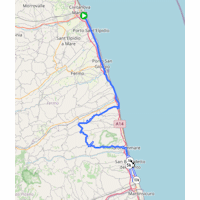
Tirreno - Adriatico 2026: routes & profiles
Click the images to enlarge
Comment
No comments yet, please share your view!