Vuelta 2026 Route stage 12: Vera - Calar Alto

Last updated: 2 September 2026 – weather forecast updated
Race type: mountain stage
Likely winner: climbers, GC riders
Weather: sunny and calm
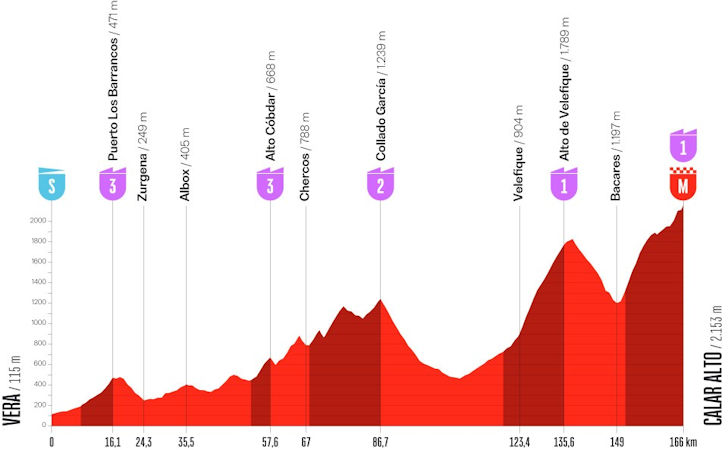
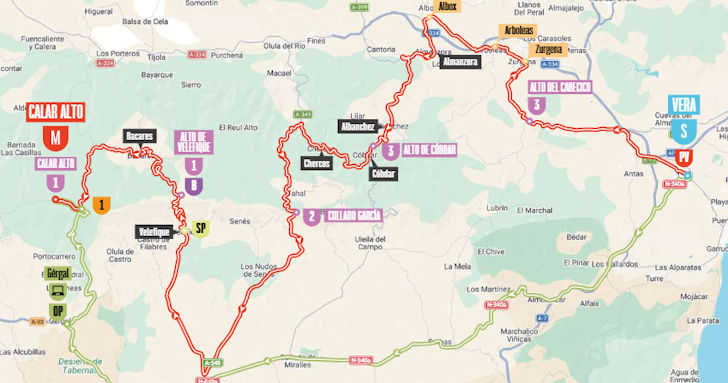
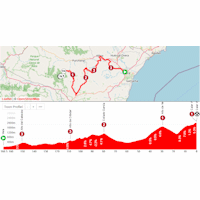
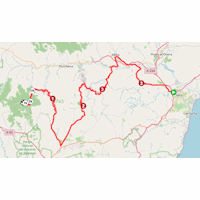
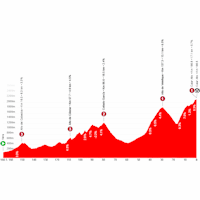
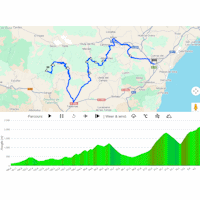
The riders can warm up their legs straight from the start, on the Alto del Cabecico. Following that 8.3-kilometre climb at 3.3%, the route continues over rolling terrain to the Collado García. It's an 18.5-kilometre climb averaging 2.4%, which the riders reach roughly halfway through the race.
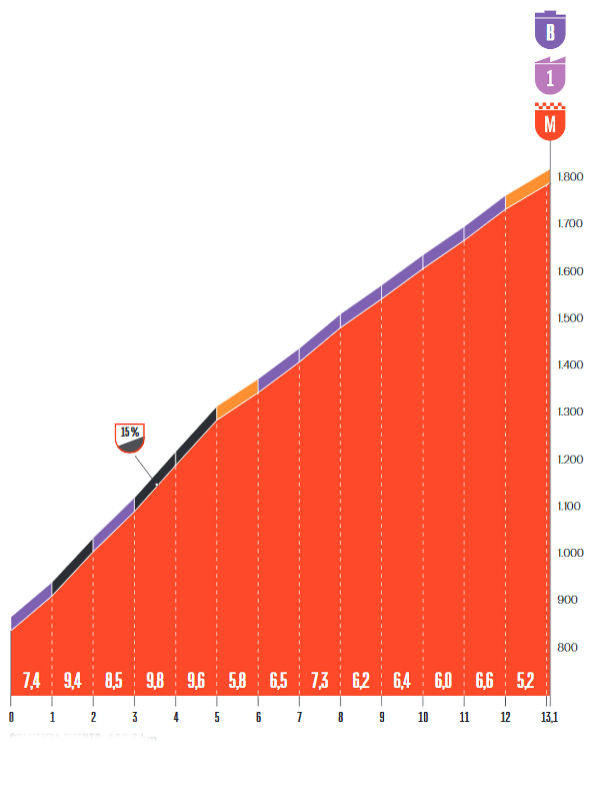
A long descent and a false flat then usher the peloton towards the decisive part of the stage. After passing through the former mining town of Velefique, the riders tackle a climb of 13.1 kilometres at an average gradient of 7.2%. It opens with double-digit gradients before easing after 5 kilometres. From there, the road climbs at gradients hovering between 6 7% towards the final kilometre, which eases to 5.2%.
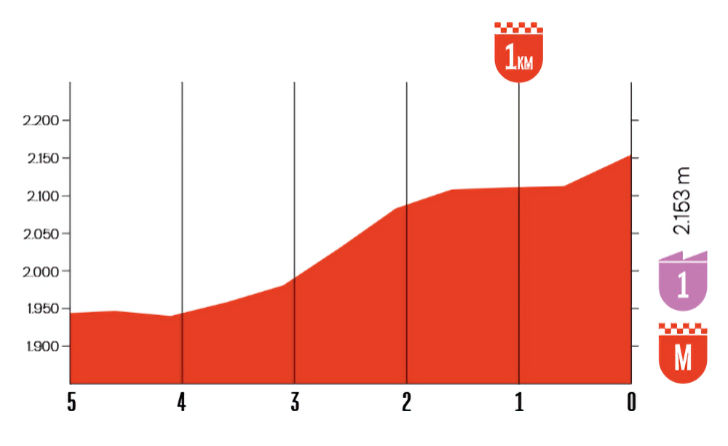
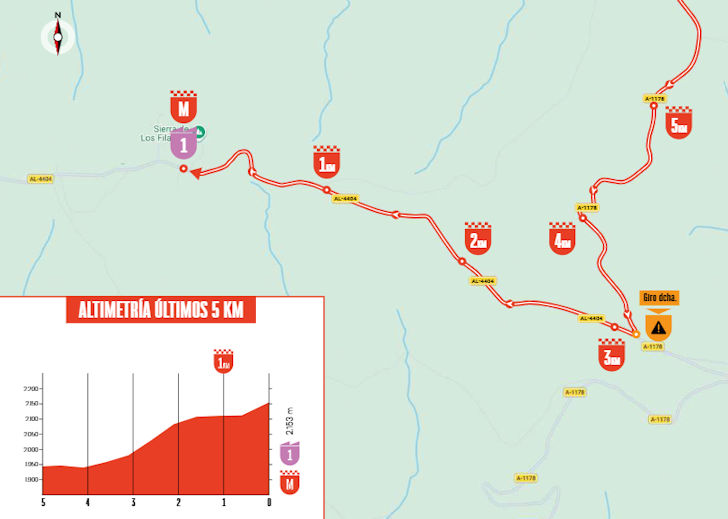
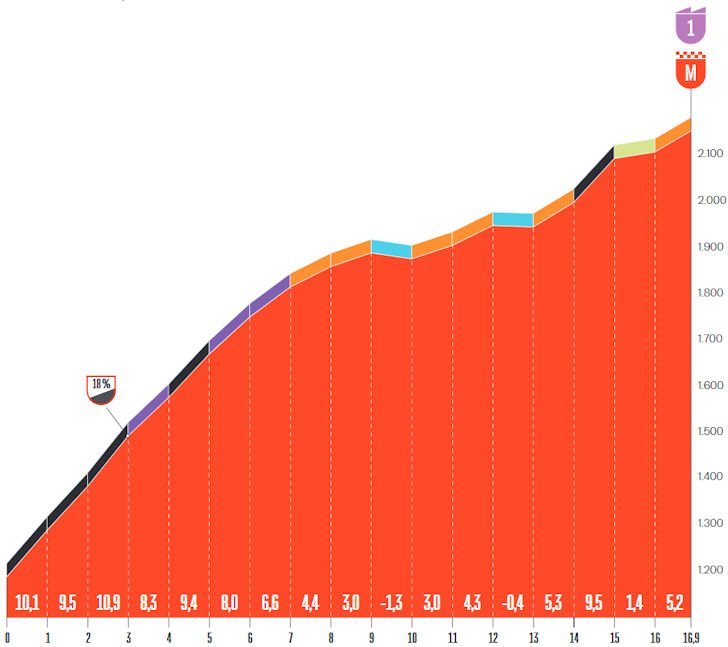
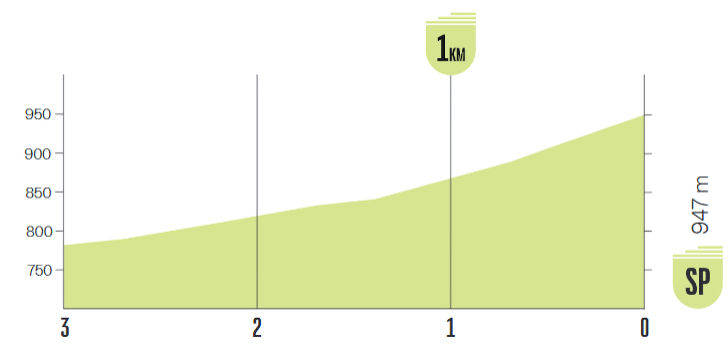
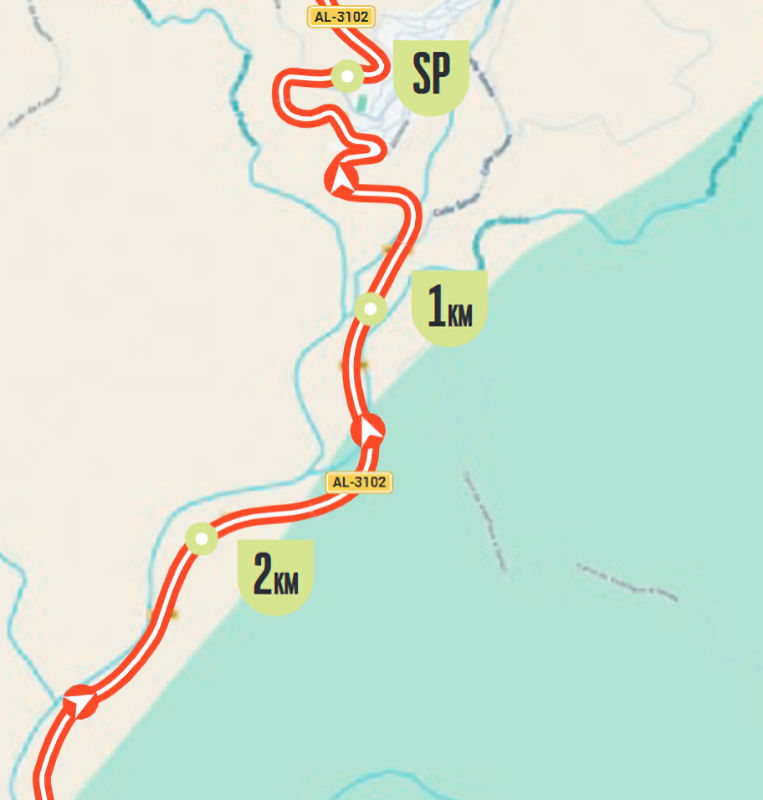
The stage finishes with the ascent to the largest telescope on the European mainland, the Calar Alto Astronomical Observatory. The climb is 16.9 kilometres long and features several steep ramps early on, with double digit over the first 3 kilometres. The climbing remains demanding until kilometre 6, after which the ascent becomes much more irregular, alternating between false flats, short descents and uphill stretches. Overall, the climb to the line averages 5.6%.
In short, stage 12 revolves around two climbs: the Alto de Velefique and the ascent to Calar Alto. The Vuelta followed the same script in 2017, when Miguel Ángel López reached the observatory 14 seconds ahead of a group containing Chris Froome, Vincenzo Nibali and Wilco Kelderman. Five editions ago, the finish line was on the Velefique, where Damiano Caruso crowned a long solo break with victory.
At the summit of Calar Alto, the winner will not only succeed 'Superman' López, but also Roberto Heras (2004) and Igor Antón (2006).
Fancy riding the route yourself? Download GPX 12th stage 2026 Vuelta a España.
The 12th stage of La Vuelta starts at 12:00 and the race is expected to finish around 17:30 - both local times (CEST).
Another interesting read: favourites to win the Calar Alto stage.
Weather forecast:
It is the kind of weather you hope for on an important day in the high mountains. The stage to Calar Alto is expected to take place in calm late-summer conditions. It will be clear and not too hot, allowing the riders to put all their energy into the race.
Start: 28°C, sunny, south-easterly wind (12 km/h)
Finish: 21°C, sunny, south-easterly wind (5 km/h)
We will update the weather forecast on the morning of the stage. For the current weather conditions along the route, see the interactive weather map in the slideshow below this article.
Vuelta a España 2026 stage 12: routes, profiles, videos
Click the images to enlarge



Comment
No comments yet, please share your view!