Vuelta 2026: Route
Last updated: 22 August 2026
Race dates: Saturday 2 August – Sunday 13 September
Race type: Grand Tour
Key stages: 4, 9, 12, 14, 18, 19 and 20
Favourites: Tadej Pogacar, Primoz Roglic, Enric Mas, Felix Gall
Title holder: Jonas Vingegaard
Record winners: Primož Roglic, Roberto Heras (4 wins)
Gran Salida
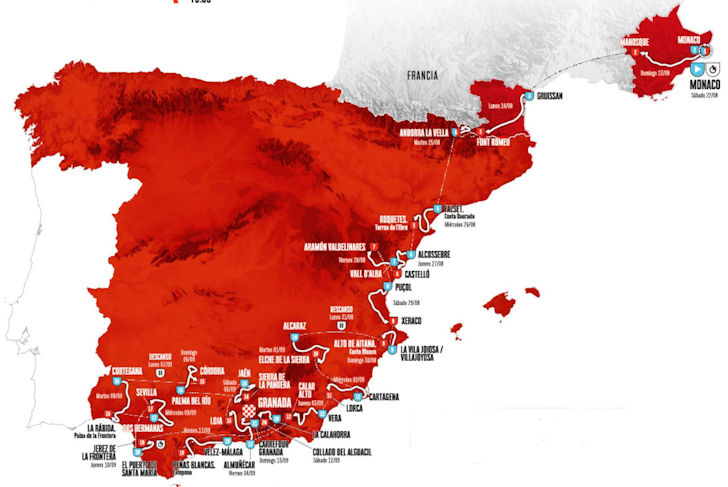
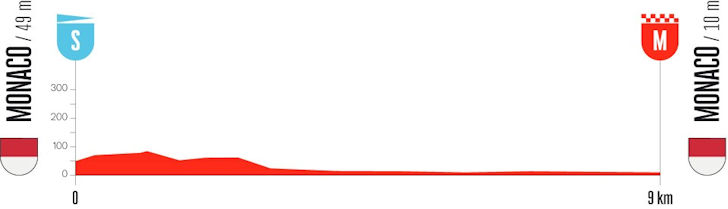
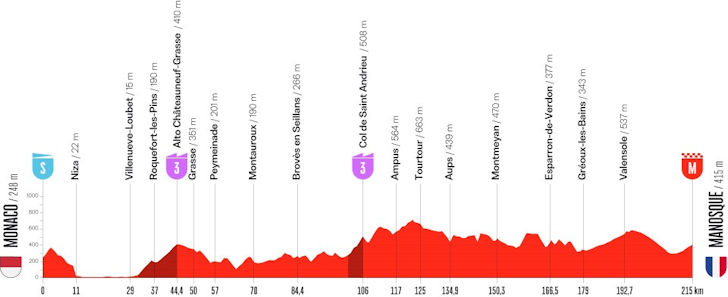
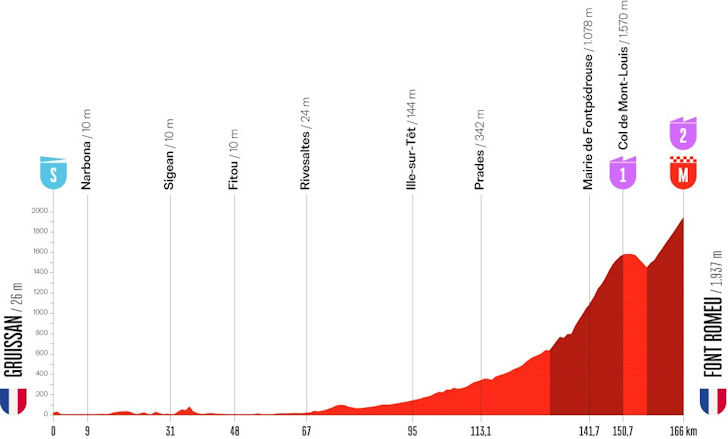
The opening stage is a 9.4-kilometre individual time trial winding its way through the tiny tax haven of Monaco. The following day, stage 2 heads through the south of France to a gently rising finish in Manosque. Stage 3 then goes from Gruissan to Font Romeu, which is a proper mountain-top finish, as Font Romeu is a ski resort at an altitude of almost 2,000 metres.
Week 1
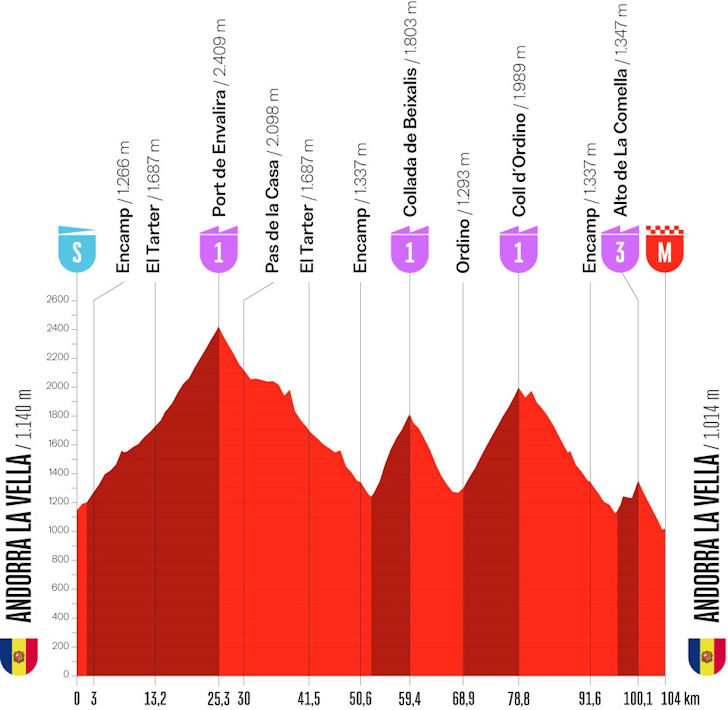
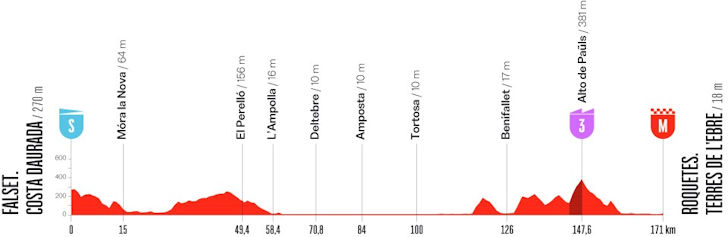
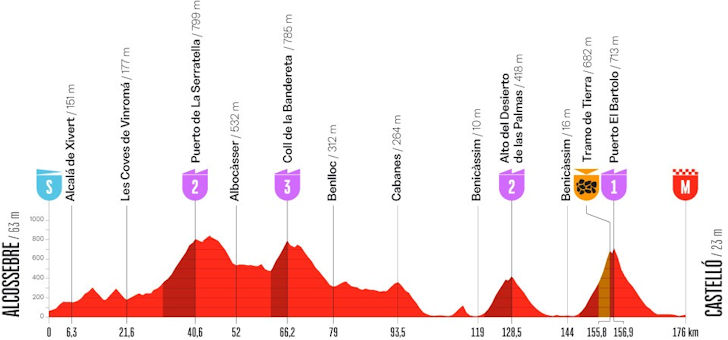
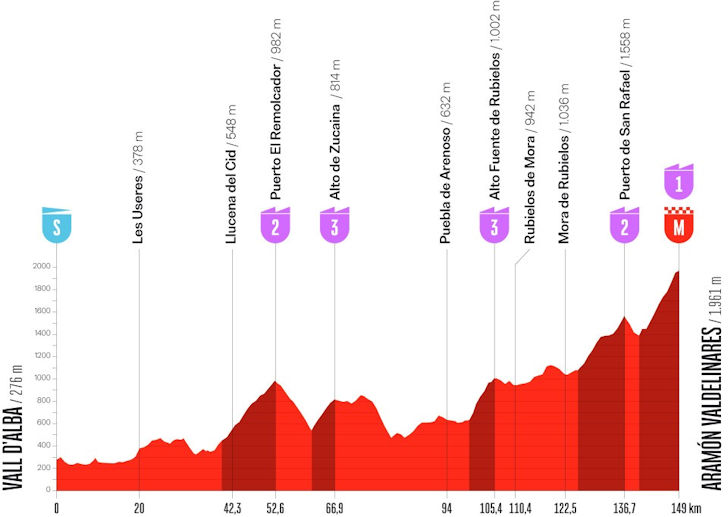
Stage 4 sees La Vuelta visit Andorra with a compact climbing stage, packing nearly 3,000 metres of elevation gain into a 104.8-kilometre course, while sprinters can look forward to stage 5, a flat route through the Terres de l’Ebre towards Roquetes. The following day, the red caravan tackles four climbs on the way to Castellón, with the challenging - and partly unpaved - Puerto El Bartolo spicing up the finale. Stage 7 features a new uphill finish – in fact, the last 50 kilometres are mostly uphill, culminating in a finish at the ski resort of Valdelinares. The final 9.8 kilometres rise at an average gradient of 5.9%.
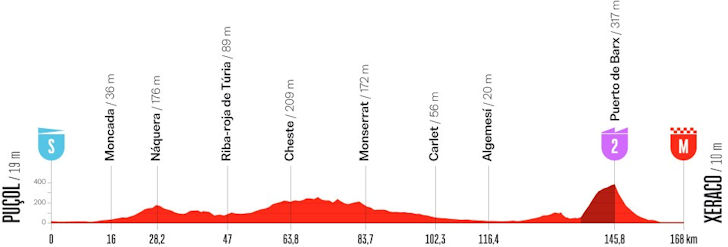
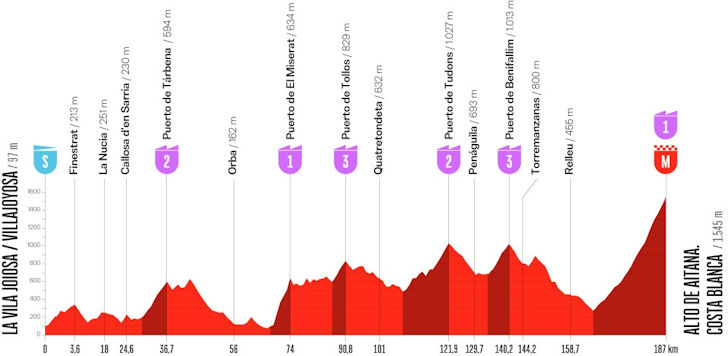
Stage 8 looks set to favour the fast men once more, before the riders arrive at the Alto de Aitana - 22 kilometres at 5.8% - on stage 9 during their southward journey. Featuring 5,166 metres of elevation gain, this is the toughest stage of the Vuelta on paper.
Week 2
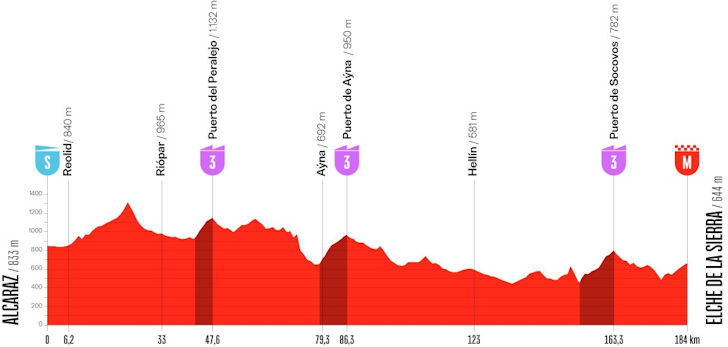
The second week opens with a constantly undulating stage finishing on a false flat in Elche de la Sierra, while stage 11 is relatively flat by Vuelta standards, aside from a modest climb in the final 29.5 kilometres.
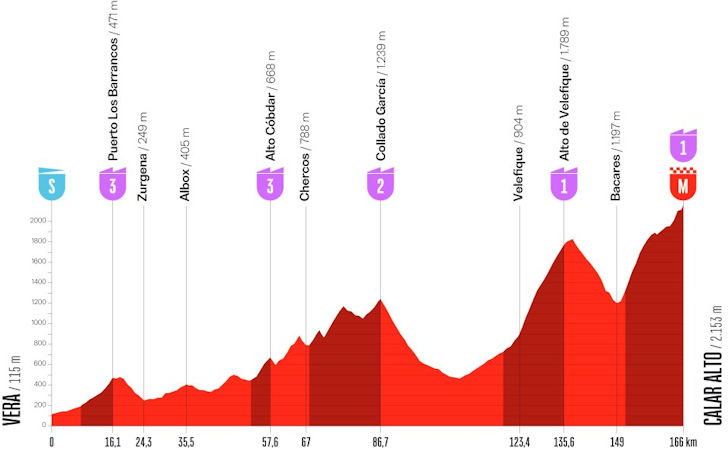
The following day, the riders tackle three introductory climbs before a finale familiar from 2017: first the Alto de Velefique (13.1 kilometres at 7.2%), followed immediately by the Calar Alto Observatory (16.9 kilometres at 5.6%, and wildly irregular). Nine editions ago, Miguel Ángel López stayed clear of a group containing Chris Froome, Vincenzo Nibali and Wilco Kelderman at the observatory.
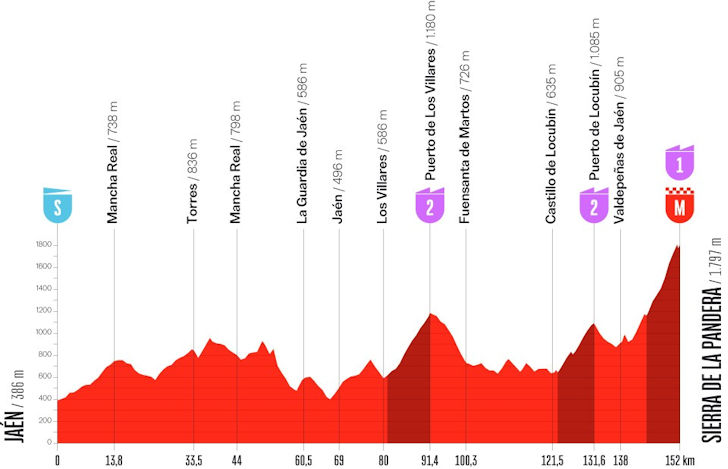
Stage 13 gets under way in the deep south of Spain, on the Costa Tropical, and finishes, after plenty of climbing along the way, on the plains west of Granada. In stage 14, the riders can brace themselves for a summit finish on the Alto de La Pandera. The final climb is 11.9 kilometres long at an average gradient of 6.2%, with the steepest kilometre pitching up to 12.5%.
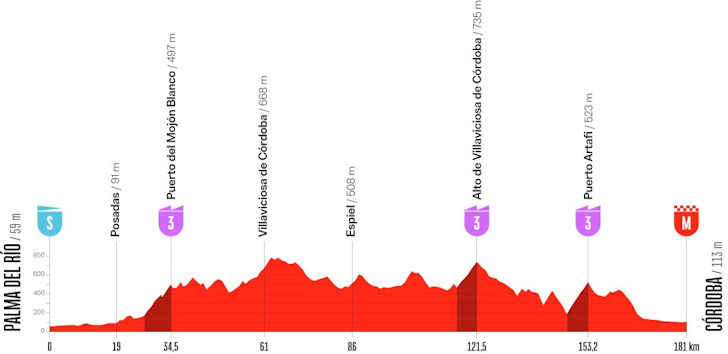
The second week concludes with a stage from Palma del Río to Córdoba, where Wout van Aert triumphed two editions ago.
Week 3
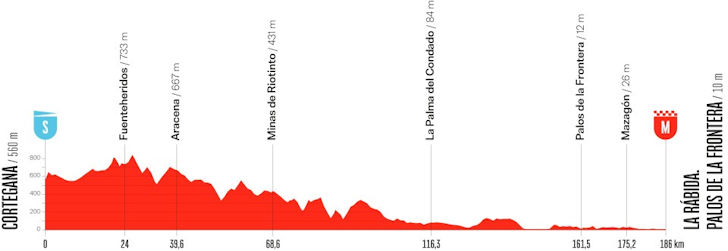
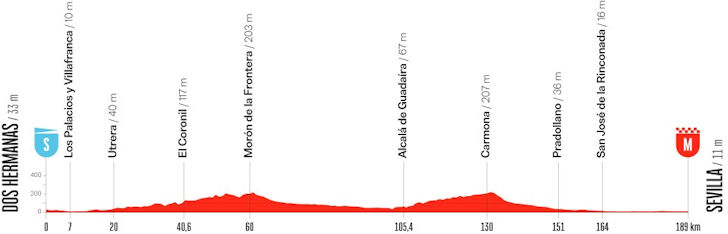
Stage 16 starts out hilly but becomes progressively flatter as the riders approach the finish in La Rábida. While that may already offer an opportunity for the fast men, stage 17 does so even more emphatically, with not a single climb on the route from Dos Hermanas to Seville.
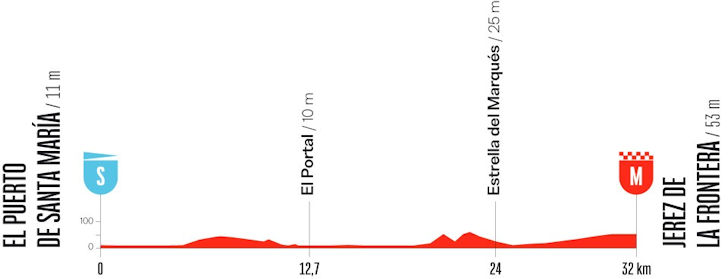
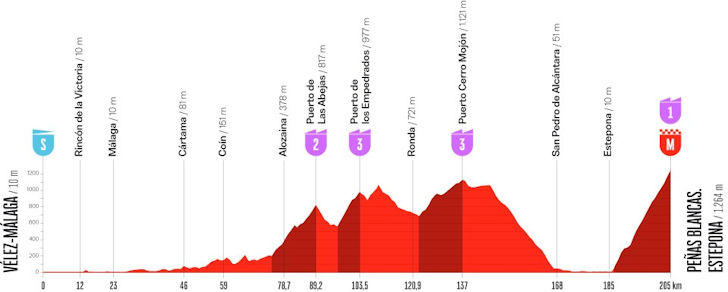
With stage 18, a decisive three-day sequence for the overall victory gets under way. The riders first tackle a 32.1-kilometre time trial on flat to gently rolling terrain, before stage 19 ups the stakes. Although it does not feature truly unscalable mountains, the final climb is a serious test. The finish comes atop Peñas Blancas, a grind of 18.8 kilometres at an average of 6.2%. In 2022, Richard Carapaz and Wilco Kelderman put on an enthralling show on the slopes above Estepona, with the Ecuadorian emerging victorious.
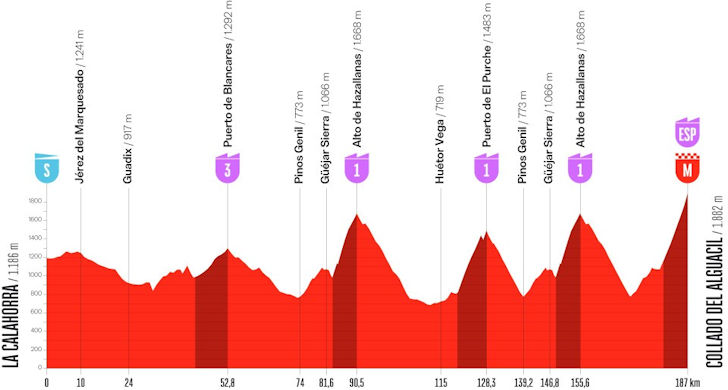
Stage 20 is a monstrous test in the Sierra Nevada. The route heads uphill on four occasions, often at unforging gradients, before finishing at the Collado del Alguacil. The final climb measures 8.3 kilometres at an average gradient of 9.8%. Yes, let that sink in for a moment: it says ‘average’, not ‘maximum’.
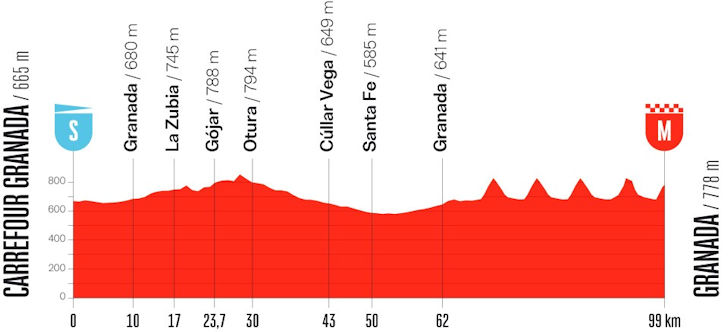
The final stage consists of a city circuit in Granada, which is spiced up with a punchy climb.
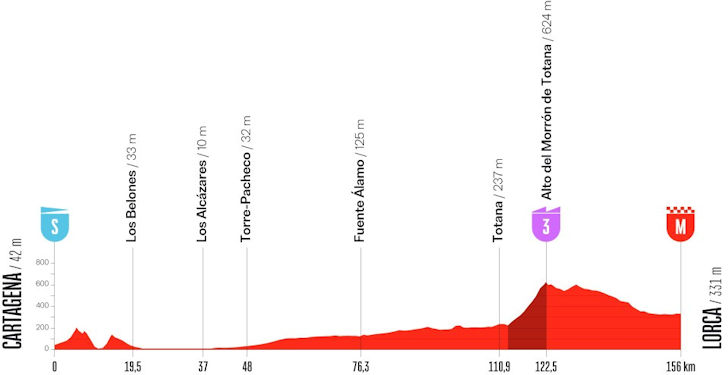
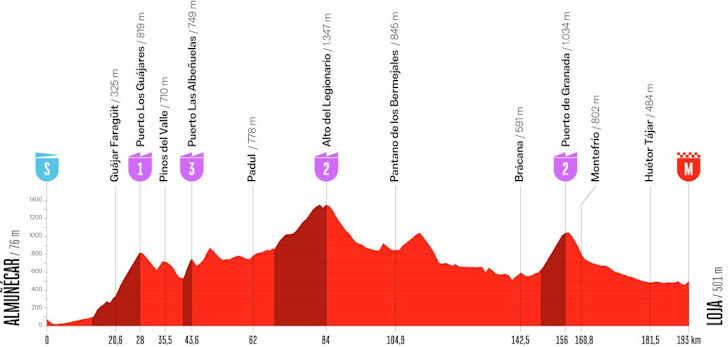
Vuelta a España 2026: route, profiles, videos
Click the images to enlarge



Comment
2 comments
Matic Vojsk
Would it be possible to get the stage maps (or, even better, routes)? Thanks, MV
Harmen Lustig
The GPX files are currently available: https://www.cyclingstage.com/vuelta-2026-gpx/