Vuelta 2026: GC contenders after Pogacar’s withdrawal
 fotobureau Cor VosTadej Pogacar’s withdrawal has turned the Vuelta a España on its head. The red jersey, once seemingly out of reach, is now genuinely up for grabs. Who are the contenders for overall victory?
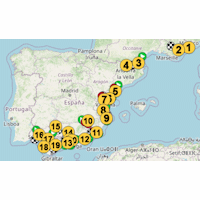
(Slideshow route/profile)
fotobureau Cor VosTadej Pogacar’s withdrawal has turned the Vuelta a España on its head. The red jersey, once seemingly out of reach, is now genuinely up for grabs. Who are the contenders for overall victory?
(Slideshow route/profile)
Last updated: 30 August 2026 – fully updated after Pogacar’s withdrawal
After eight days, the Vuelta a España has to continue without the best cyclist in the world. Pogacar looked to be cruising towards a commanding overall victory, with the only question being how many stages he would win. And suddenly, everything has changed. We take another look at the chances of the various contenders.
The Vuelta a Burgos is a good benchmark. It was held in early August, and quite a few riders used the race in northern Spain to fine-tune their form for La Vuelta. Onley, Mas, Gall, Vine, Landa, Widar, Dunbar, Tulett. Unsurprisingly, those who looked strongest in the first week of the Vuelta were also among the riders who made the biggest impression in Burgos.
After five days of racing, Gall was crowned the overall winner. The Austrian won the stage to Puerto de Escudo, beating Onley in a one-on-one battle. The Scot had been the strongest rider on a punchy finish the day before, but had to bow to Gall when the Austrian turned up the pressure on the longer Puerto de Escudo.
While Gall and Onley were in the spotlight in Burgos, Mas remained under the radar, but he was definitely in the mix as well. He finished fifth, behind Gall, Onley, Ciccone and Pellizari. If we take the two Italians out of the equation – they are not riding the Vuelta, after all – that could quite easily be the final podium in Granada: 1st Gall, 2nd Onley, 3rd Mas.
Other contenders
 Not the entire Vuelta peloton raced the Vuelta a Burgos. Two riders who were absent, for instance, are big candidates to play a major role in Spain. They are the kind of riders who seem to find an extra gear as soon as they smell victory. Pure winners: Carapaz and Roglic.
Carapaz’s last race was the Tour, where he won two stages and the King of the Mountains jersey, while Roglic’s was the Tour de Suisse. The Slovenian finished a rather anonymous eighth there, much like his season as a whole has been rather underwhelming so far. At the same time, you could argue that he has had just one goal in mind all along: to shine at the Vuelta a España. There is an extra incentive for the Slovenian, too. If he wins the Vuelta, he will become the record holder with five overall victories.
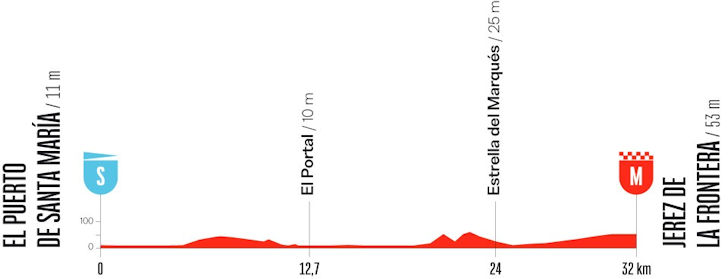
With the aim of becoming the sole record holder – he currently shares the record with Roberto Heras – Roglic was the first GC contender to announcethat he would ride La Vuelta. When it became clear that he would have to beat Pogacar, he tempered his expectations somewhat. But now he can once again focus fully on his main goal. Another advantage for Roglic is that he is by far the best time triallist among the GC contenders. That could prove crucial, with the time trial to Jerez de la Frontera on the menu in the final week.
 And then there’s Carapaz. In the first week of La Vuelta, he was unable to stay with the other GC contenders when it really mattered, but it’s not as if he was dropped completely. He has the Tour in his legs, and it would be no surprise if, with Pogacar out of the race, he manages to find another gear. The Ecuadorian is a relentless attacker who is capable of the unexpected.
Alongside Roglic, Carapaz also boasts the most impressive palmarès. He won the Giro in 2019 and has also taken multiple stage wins across all three Grand Tours. On top of that, he is the Olympic champion from Tokyo and has won the King of the Mountains jersey twice at the Tour (2024 and this year) and once at the Vuelta (2022).
Like Carapaz, Kuss and Skjelmose also rode the Tour. Given his performances in the first week, that may be a bit too much to ask of the Dane, so perhaps he will switch his focus to stage wins. Kuss is in a much better position in the overall classification, although you have to wonder how fresh he still is. After all, he was also there as a super-domestique when Vingegaard won the Giro in May. In fact, he added a stage win of his own to his campaign in Italy.
Conclusion: who is the favourite for the Vuelta after Pogačar’s withdrawal?
Mas, Gall and Roglic have all prepared specifically for the Vuelta, while the same is necessarily true of Onley, who missed the Tour due to injury. That gives them an advantage over riders coming off the Tour de France.
In our view, Gall has the strongest credentials. As mentioned, he won the Vuelta a Burgos, and last May he was the best of the rest at the Giro. Vingegaard did what he always does when Pogacar isn’t there – win – and the Austrian was the only rider able to offer any resistance, although he was never really in contention for more. That pattern seemed to repeat itself at the start of La Vuelta. In the Andorra stage, the Austrian was the only rider able to follow Pogacar, until he realised it was a mission impossible and decided to save his energy for the battle among the lesser mortals. Now, those lesser mortals will battle it out for the win.
Mas is a typical Vueltaman. Outside Spain, his performances tend to be rather underwhelming, but he comes alive in his home Grand Tour: third in 2024, sixth in 2023, second in 2022 and 2021 and also runner-up on his Vuelta debut in 2018, and fifth overall plus the young rider classification in 2020. One striking feature, however, is that he hardly ever wins stages. His only Vuelta stage victory came on his debut in 2018.
And then there’s Roglic. It remains to be seen how the 36-year-old will hold up as the Vuelta progresses, but there is no questioning his credentials as a winner. His palmarès includes a Giro overall victory, four Vuelta overall victories, Liège-Bastogne-Liège, and a whole host of overall wins in races such as Paris-Nice and Tirreno-Adriatico. The one caveat is that his last victory came a year and a half ago, although he certainly made it count: he won the GC and two stages at the Volta a Catalunya.
Vuelta a España 2026 favourites
*** Felix Gall
** Oscar Onley, Primoz Roglic, Enric Mas
* Richard Carapaz, Mattias Skjelmose, Sepp Kuss
Key stages
Click the italicised links for the stage descriptions
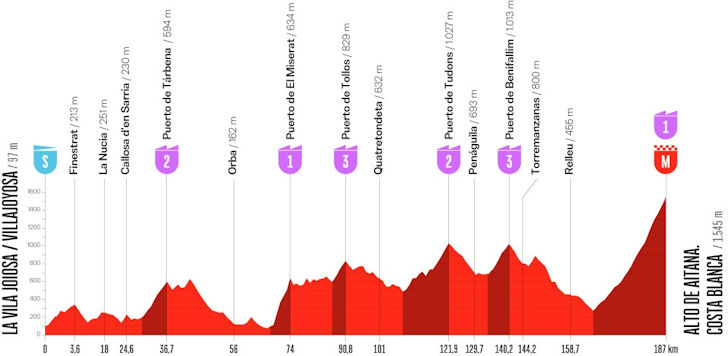
Stage 9: to Alto de Aitana – 187.4 kilometres with 5,166 metres of elevation gain, 22-kilometre final climb at 5.8%
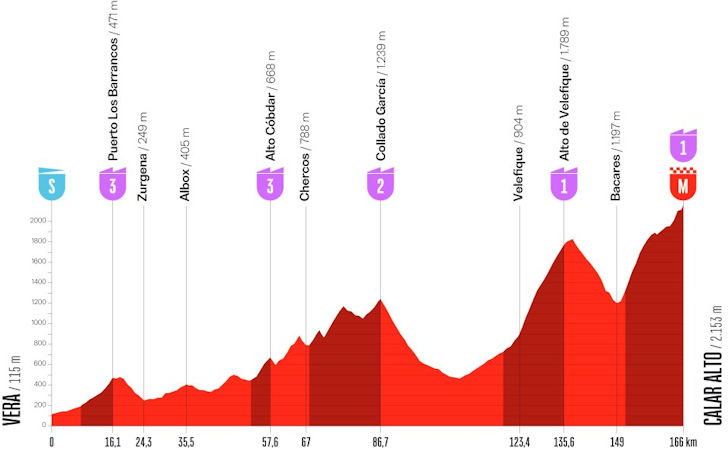
Stage 12: to Calar Alto – 166.6 kilometres with 4,568 metres of elevation gain, irregular 16.9-kilometre final climb at 5.6%
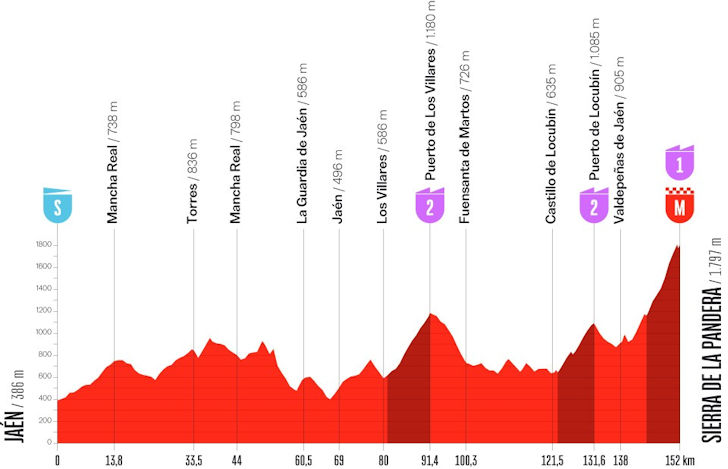
Stage 14: to Sierra de La Pandera – 154.5 kilometres with 4,338 metres of elevation gain, irregular 11.9-kilometre final climb at 7.2%
Stage 18: time trial to Jerez de la Frontera – 32.1 kilometres and flat
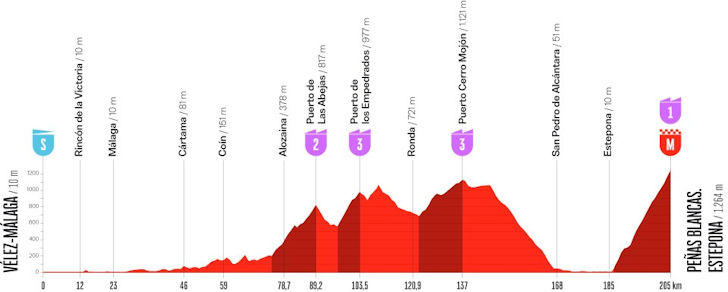
Stage 19: to Peñas Blancas – 210.8 kilometres with 4,052 metres of elevation gain, 18.8-kilometre final climb at 6.5%
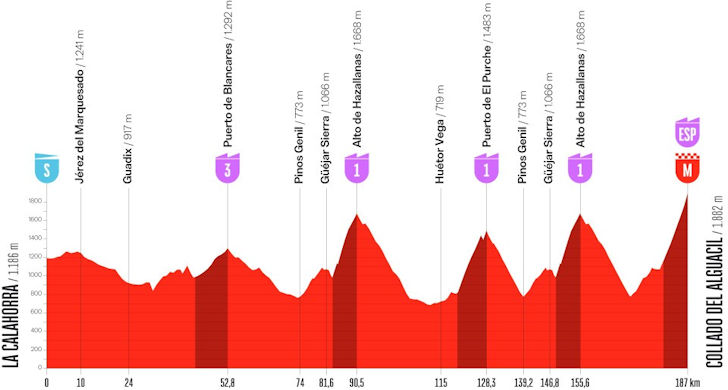
Stage 20: through the Sierra Nevada to Collado del Alguacil – 186.8 kilometres with 4,890 metres of elevation gain, 8-kilometre final climb at 8.9%
Vuelta a España 2026: route & profiles
Click the images to enlarge
Comment
No comments yet, please share your view!