Clásica de San Sebastián 2025: The Route

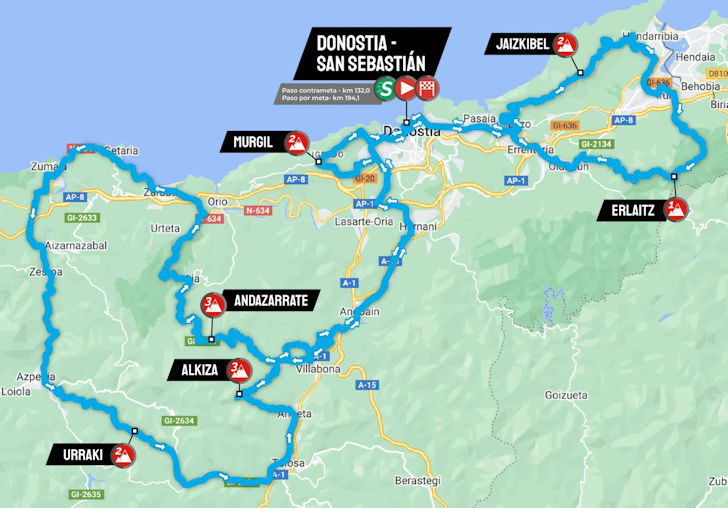
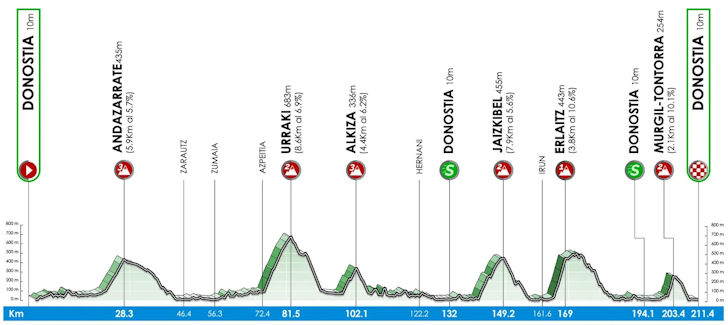
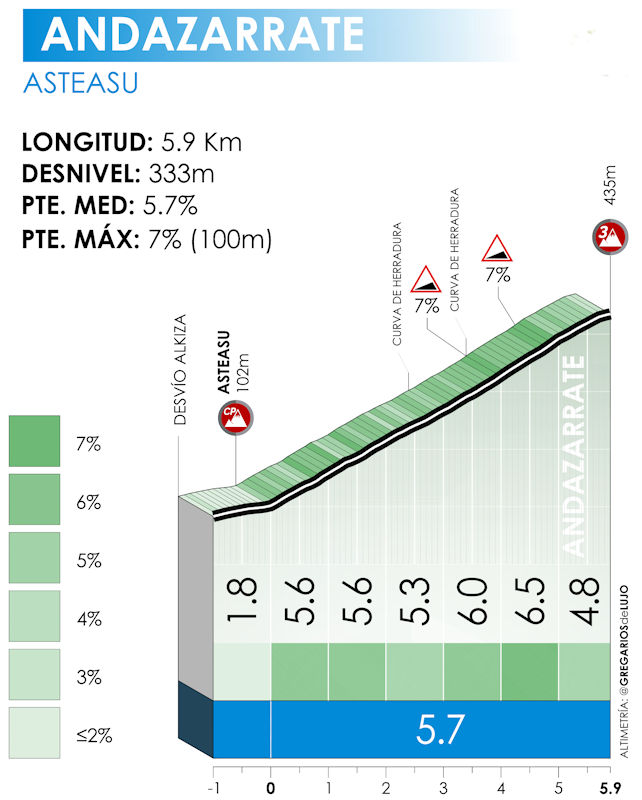
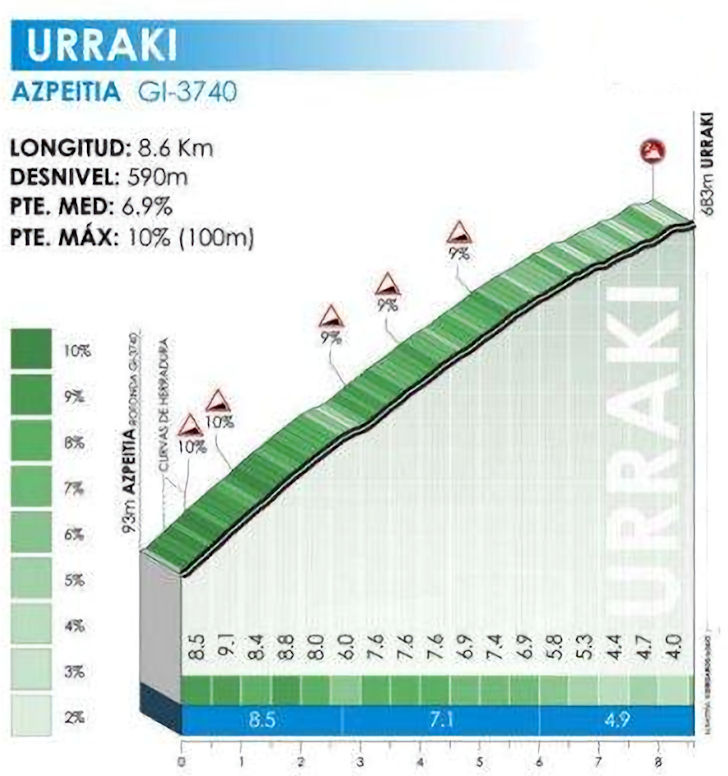
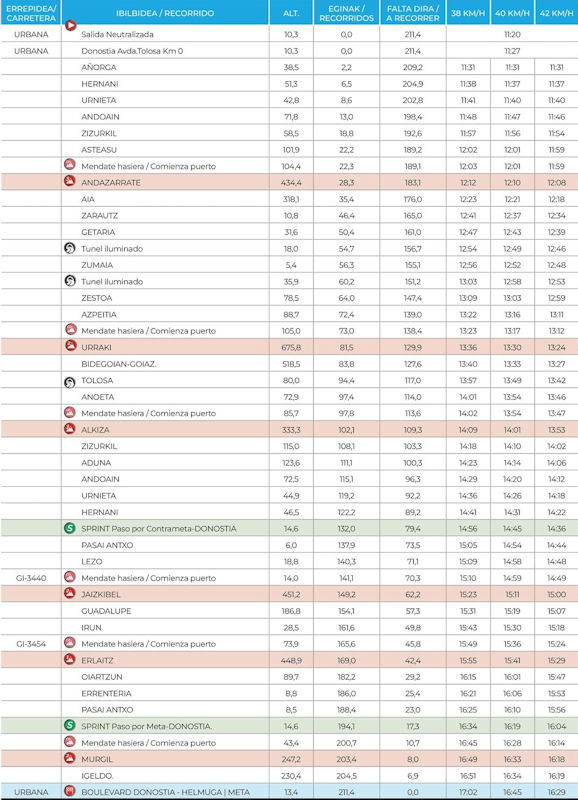
Following a gently rolling first phase, the riders can test their legs on the Andazarrate, a 5.9 kilometres slope with an average gradient of 5.7%. Some 45 kilometres later the second climb comes in the shape of the Urraki, which is an ascent of 8.6 kilometre at 6.9%. The riders reach the summit after 81.5 kilometres of action.
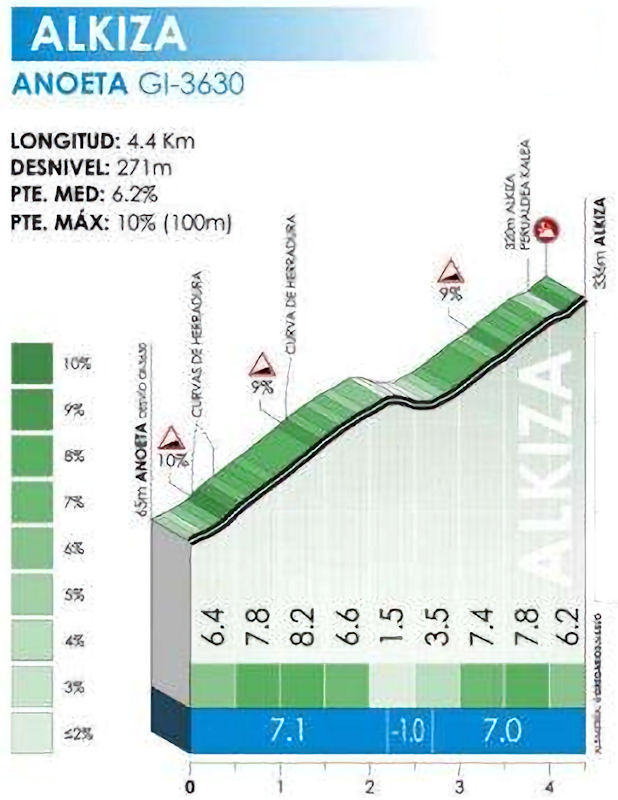
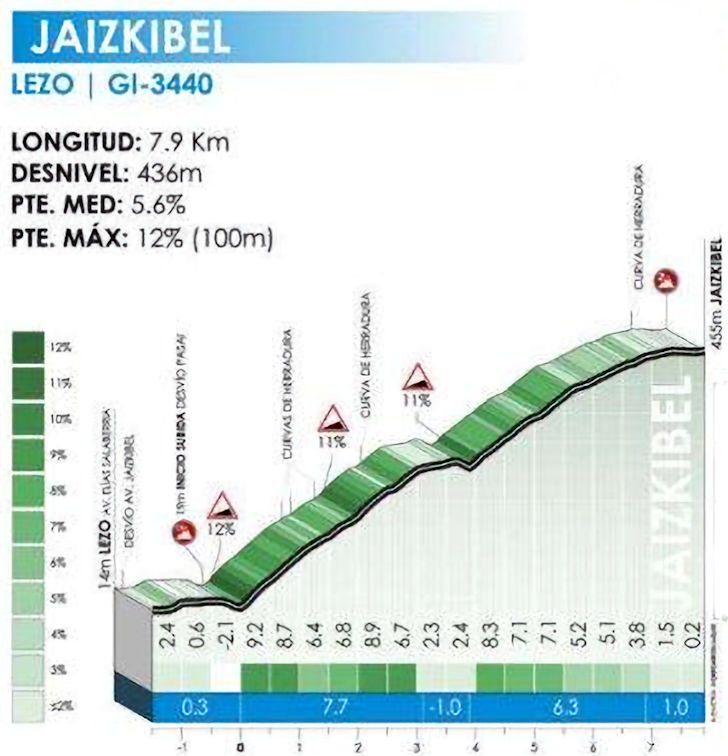
The Azkarate descent precedes the Alkiza climb (4.4 kilometres at 6.2%), before the riders take on an undulating section and eventually pass through San Sebastián. They then tackle the Jaizkibel on the other side of the city. The 7.9-kilometre ascent at 5.6% is a staple of the Clásica de San Sebastián.
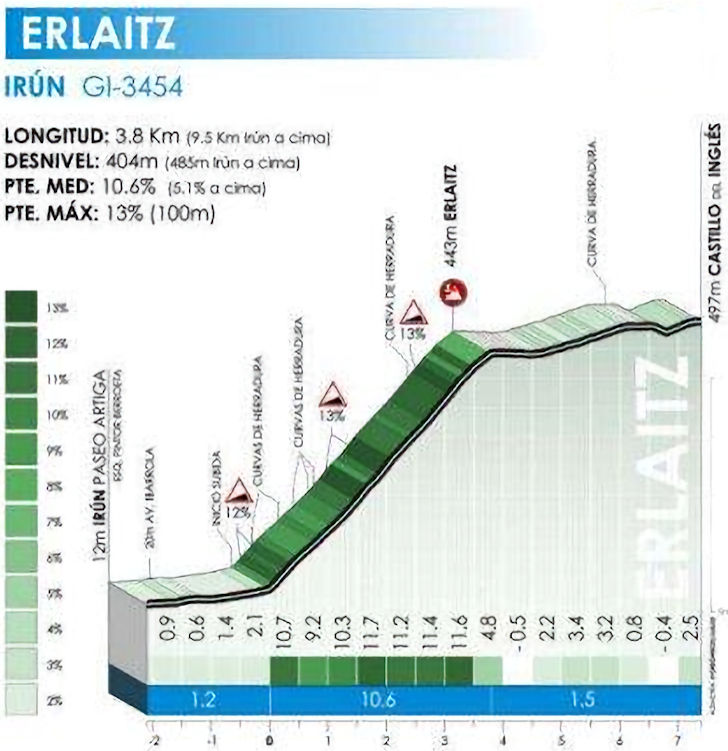
Roughly 7 kilometres after the descent, the riders face the brutal Erlaitz climb – 3.8 kilometres long at an average gradient of 10.6%. And it’s not over at the summit, as the road continues to rise gently for nearly 4 more kilometres.
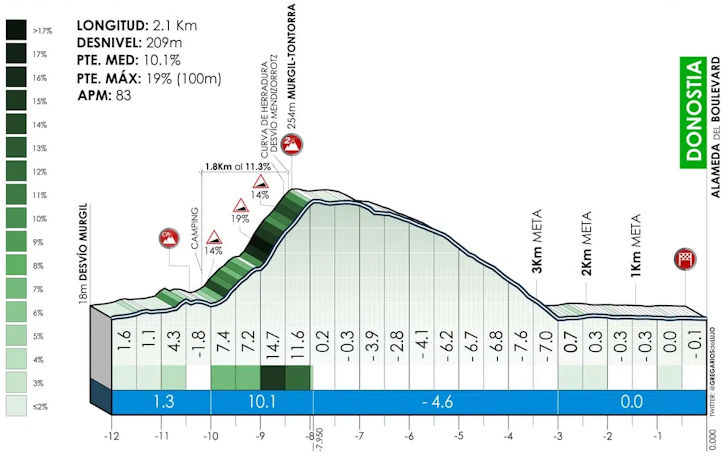
The descent eventually takes the riders onto a flat section, that's best described as the calm before the storm. They pass through San Sebastián once more, before tackling the pièce de résistance on the eastern side of the city: the Murgil-Tontorra. It's a challenge of only 2.1 kilometres, but the average gradient of 10.1% is sheer intimidation. The second part is the hardest.
After a virtually flat kilometre at the top, the road descends for 4 kilometres before the Clásica de San Sebastián concludes with 3 kilometres on the flat.
Marc Hirschi won last year's edition in a two-up sprint from his current team-mate Julian Alaphilippe.
Another interesting read: results 2025 Clásica de San Sebastián.
Clásica de San Sebastián 2025: routes, profiles, more
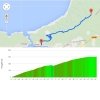
Click the images to enlarge