Volta a Catalunya 2026: Route
Published on 21 January 2026
Last updated on 22 March 2026 – weather forecast added
Key stages: 4, 5 and 6
Favourites: Jonas Vingegaard, Remco Evenepoel, João Almeida, Tom Pidcock
Record holder: Mariano Cañardo (5 overall wins)
Stage-by-stage breakdown of the 2026 Volta a Catalunya
[Click on the italicised links for detailed stage descriptions]
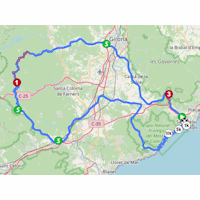
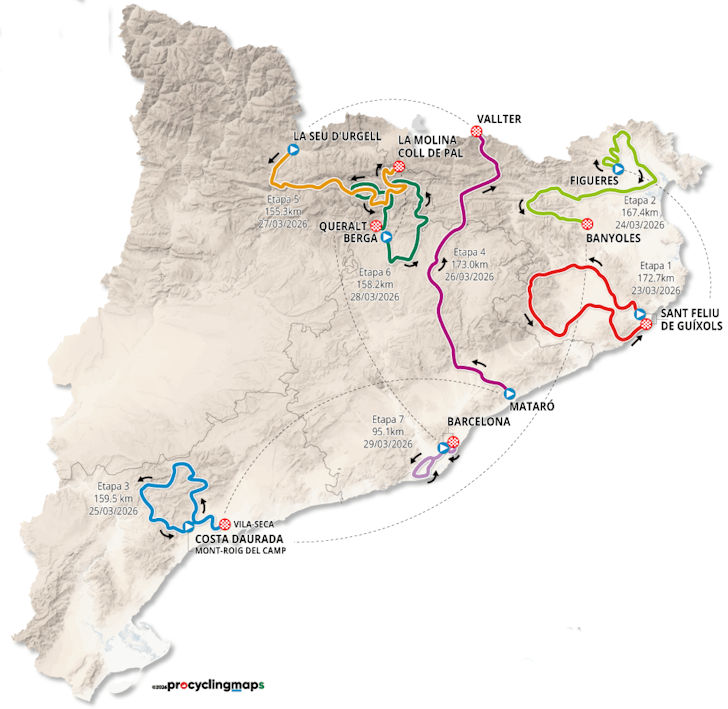
Stage 1 - 172.2 kilometres, 2,129 metres of climbing
For the fifth year in a row, Sant Feliu de Guíxols hosts both the start and finish of the opening stage. This time it is a fairly flat affair, ending on a sharp little climb. Last year, Matthew Brennan took the win after a late attack from Tibor Del Grosso ran out of steam just before the line.
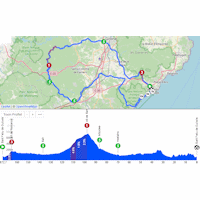
Stage 2 - 167.4 kilometres, 2,108 metres of climbing
The peloton travels from Figueres to Banyoles on the second day. Last year, the route ran in the opposite direction, and Ethan Vernon sprinted to victory. This time, the course is hillier and therefore more challenging, though that doesn’t mean the sprinters are out of contention. Should it come down to a sprint, they will need to take into account that the road rises slightly over the final 500 metres.
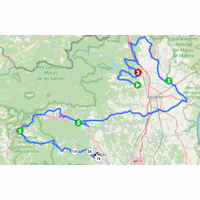
Stage 3 - 159.5 kilometres, 2,252 metres of climbing
In stage 3, the riders set off from Mont-roig del Camp, a town that has never before featured on the Volta a Catalunya, and head to Vila-seca, where Michael Matthews sprinted to victory on a slightly uphill finish back in 2019. This time the final straight slopes gently downhill, but the early part of the stage features plenty of climbing.
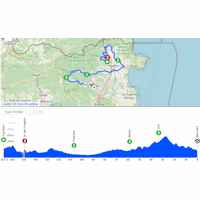
Stage 4 - 173.0 kilometres, 3,995 metres of climbing
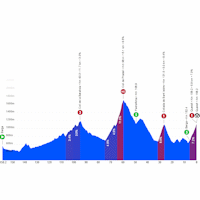
The high mountains come into play from the fourth day onwards. The climbers' bonanza opens with a stage from Mataró to Vallter, where Tadej Pogacar soloed in cold and wet conditions to the leader’s jersey in 2024. The finish in the ski resort sits at 2,110 metres above sea level, the highest point of La Volta. The finish climb is 11.4 kilometres long and averages 7.6%.
Stage 5 - 155.3 kilometres, 4,455 metres of climbing
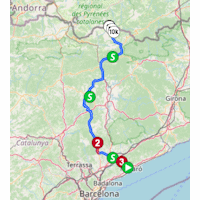
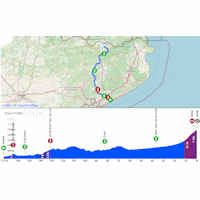
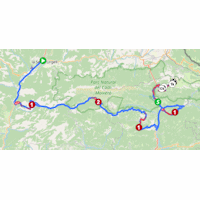
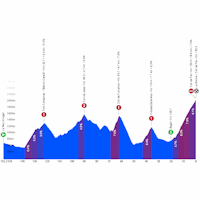
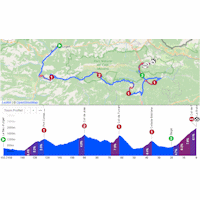
Stage 5 finishes at a similar altitude in the Pyrenees on the Coll de Pal, a climb that hasn’t featured in the Volta a Catalunya since 1979. After four major ascents along the way, the final climb is a brutal 18.9-kilometre effort averaging 7%.
Stage 6 - 158.2 kilometres, 4,064 metres of climbing
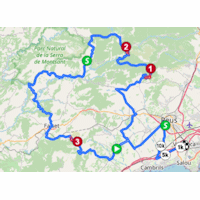
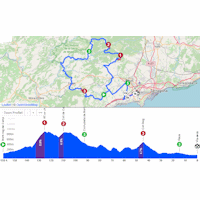
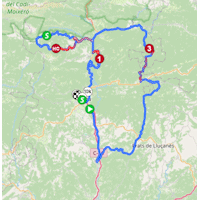
In stage 6, the riders take on what could not go ahead last year because of bad weather: a beast of a stage, featuring a final climb of 5.9 kilometres at an average gradient of 7.5% to the Santuario de Queralt. Two years ago, Tadej Pogacar put on a show over virtually the same roads. Last year’s Queralt stage was cancelled due to strong gusts in the higher regions.
Stage 7 - 95.1 kilometres, 1,781 metres of climbing
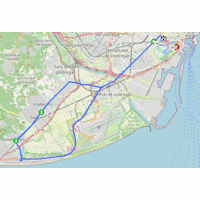
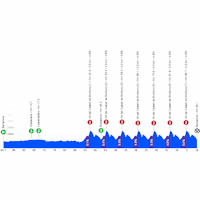
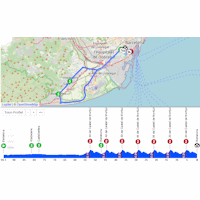
The final stage is the traditional closer of the Volta a Catalunya. The riders set off from Plaça Espanya in Barcelona and loop through the surrounding area. Once back at Plaça Espanya, the finale consists of seven hilly runs on the 7.9-kilometre Alto de Montjuïc circuit, a formula that always delivers spectacle. Adding extra intrigue, the Montjuïc will host the Tour de France Grand Départ in July.
Weather forecast:
The riders can look forward to a week of cycling in pleasant spring conditions. No rain is forecast and temperatures are set to be mild, although it will be significantly colder in the mountains. Strong winds are expected on Wednesday.
Volta a Catalunya 2026: routes, profiles, video
Click the images to enlarge