Giro 2027: Route
Published on 12 October 2026
Last updated: 3 November
Race dates: Saturday 8 May-Sunday 30 May
Racetype: Grand Tour
Key stages: 5, 9, 14, 15, 16, 18, 20
Favourites: to follow
Title holder: Jonas Vingegaard
Record holders: Alfredo Binda, Fausto Coppi, Eddy Merckx (5 wins)
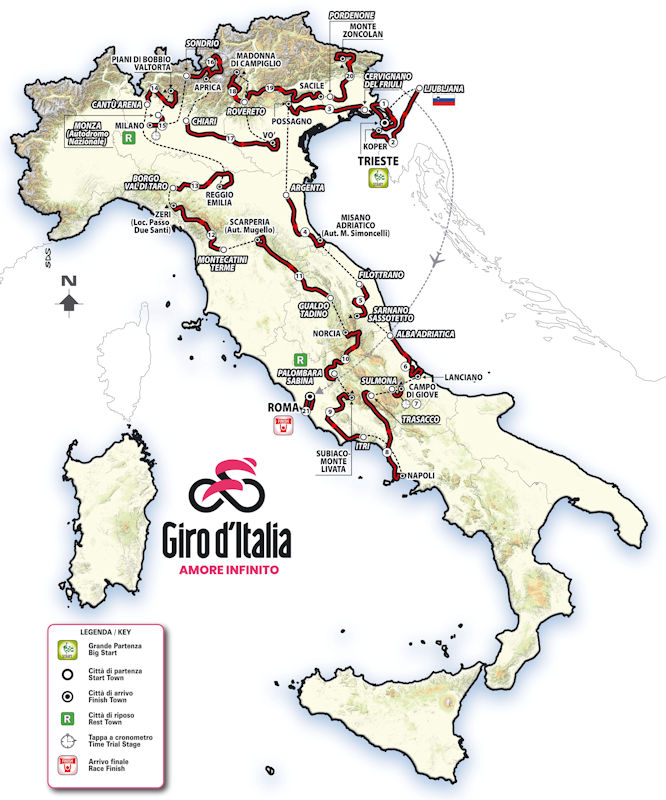
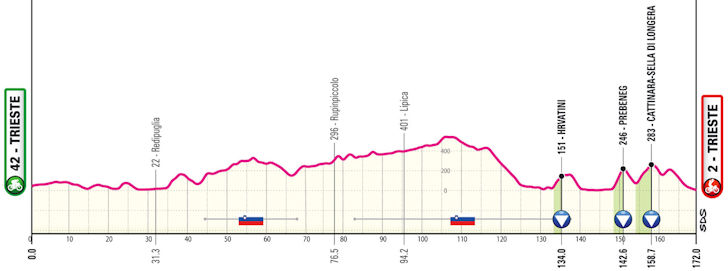
Stage 1 finishes where it starts, in Trieste. The Giro last visited the city in 2014, when it hosted the final stage, won by Luka Mezgec in a sprint finish ahead of Giacomo Nizzolo and Tyler Farrar. Given the demanding and lumpy course, a similar outcome is highly unlikely.
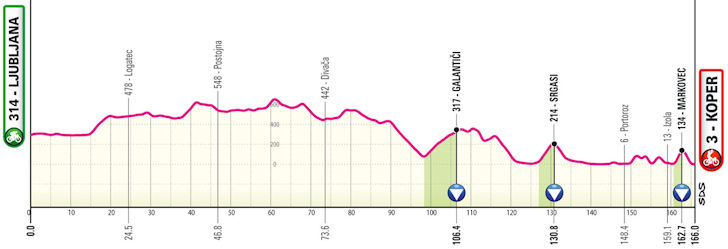
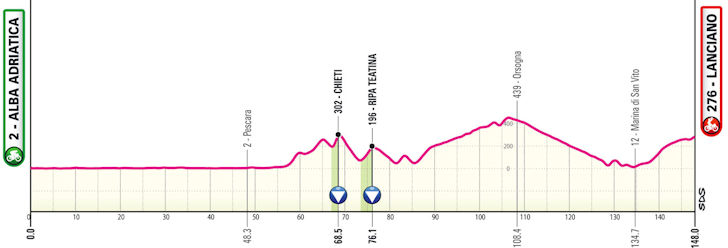
The opening stage takes the riders through Slovenia for part of the route, and Pocacar's home country is also the starting and finishing point for stage 2. Setting off from Ljubljana, the riders head to the port city of Koper.
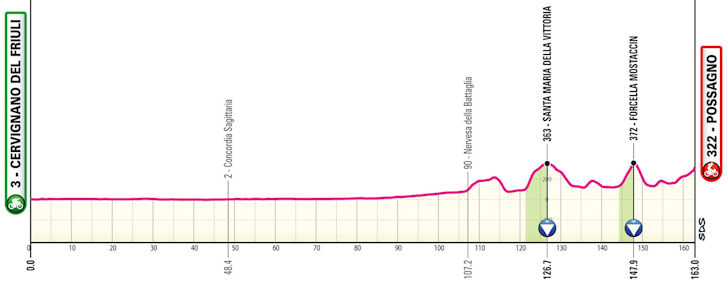
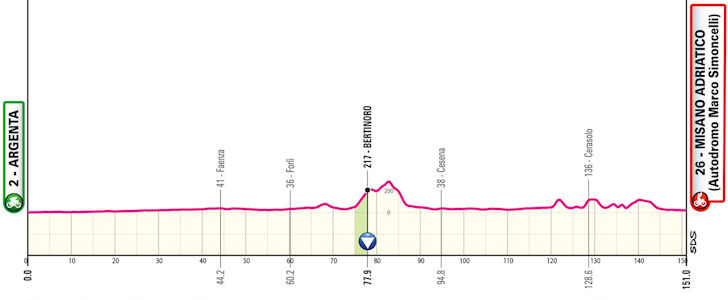
Stage 3 runs from Cervignano del Friuli to Possagno, after which the Giro heads south along the Adriatic coast. Stage 4 then finishes at the Misano World Circuit Marco Simoncelli, before the pink convoy crosses the Apennines towards the Tyrrhenian coast.
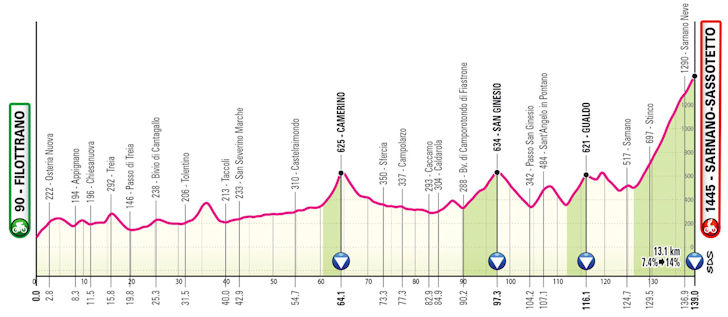
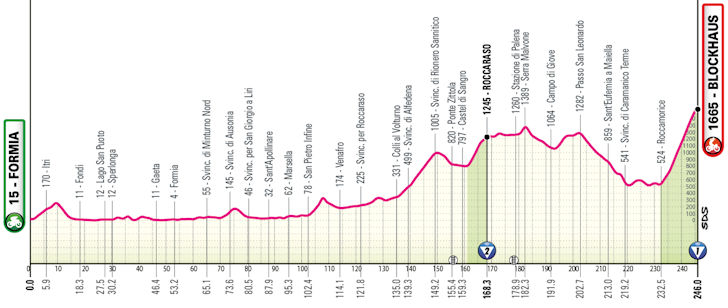
The crossing of the Apennines serves up the first mountain top finish in stage 5, a race that culminate in a 13.1-kilometre climb averaging 7.4% to the ski resort of Sassotetto. Stage 6 starts on flat roads and features a punchy middle section, before the terrain becomes more rolling in the second half, while stage 7 brings a challenging individual time trial in Abruzzo. Covering 19.6 kilometres, it takes the riders from Sulmona to the ski resort above Campo di Giove. The key feature is a 12.5-kilometre climb with an average gradient of 4.4%.
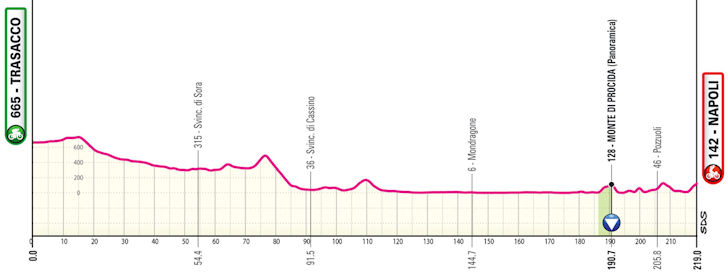
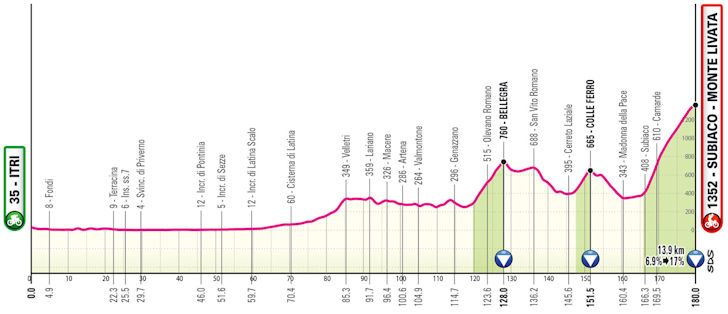
For teh 8th stage, the Giro d’Italia serves up a finish in Naples for the sixth year in a row, which typically results in a bunch sprint. The following day, it is back to climbing as the riders travel from Itri to the summit of Monte Livata. The final climb of stage 9 is 14 kilometres long, with an average gradient of 6.9%.
Week 2
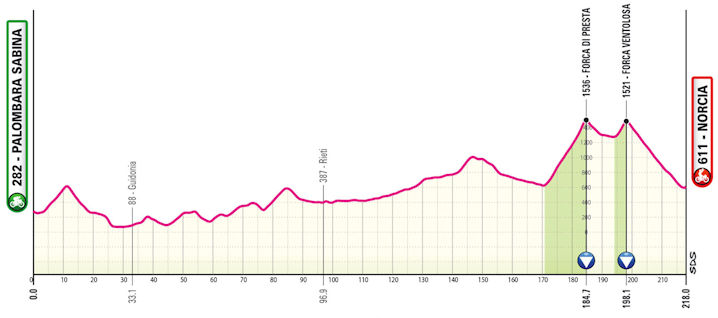
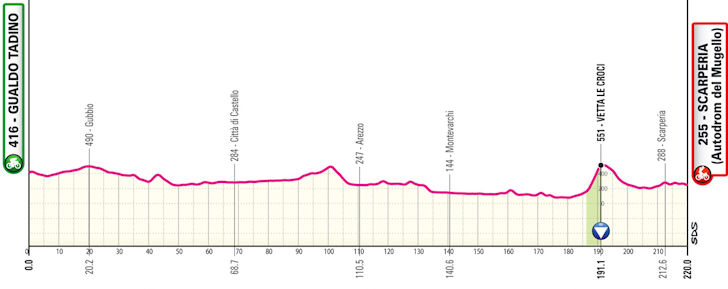
The riders head back north again during the second week. Stage 10 takes them from Palombara Sabina, north-east of Rome, to Norcia, before stage 11 finishes at the Mugello Circuit in Scarperia e San Piero, near Florence.
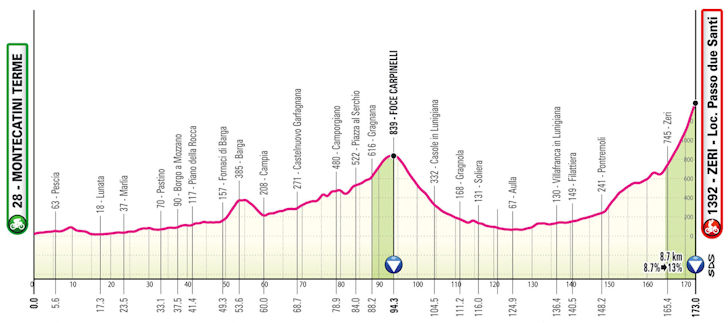
It's back to the climbers in stage 12, as the route runs from Montecatini Terme to the unprecedented ski resort of Zum Zeri. The riders will face a final climb of 8.5 kilometres at an average gradient of 8.5%, with the steepest ramps hitting 14%.
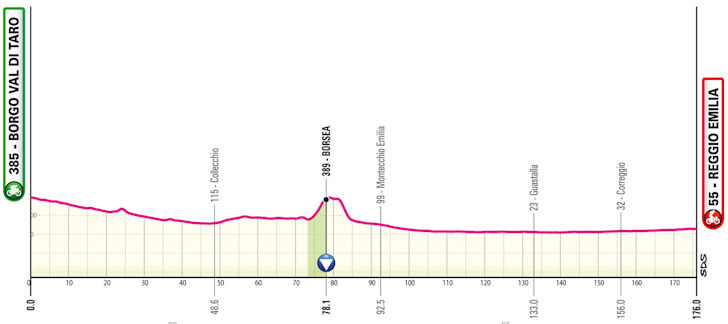
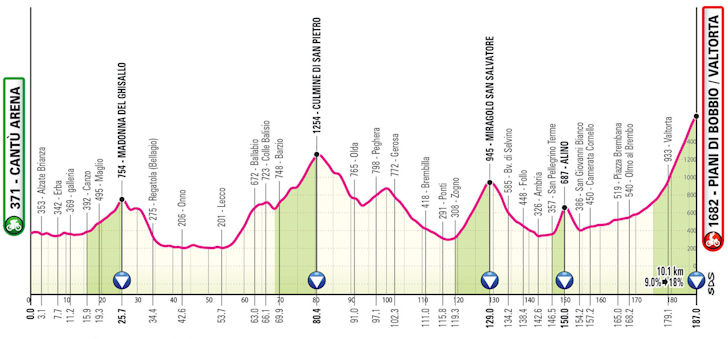
While the sprinters get their chance to shine on stage 13, stage 14 takes the riders from Cantù Arena to Piani di Bobbio. The final climb is 21.2 kilometres long at an average gradient of 5.6%, with the second half by far the toughest, averaging 8%. Before tackling the final ascent, the riders must also negotiate the Madonna del Ghisallo, Culmine di San Pietro and Miragolo San Salvatore.
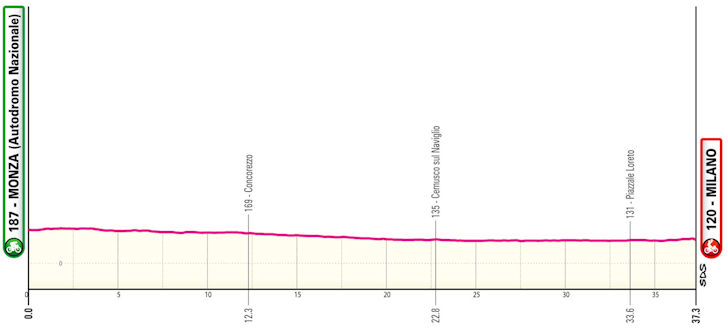
Stage 15 then offers pure time-trial specialists a golden opportunity on a flat 37.3 kilometres route between Monza and Milano.
Week 3
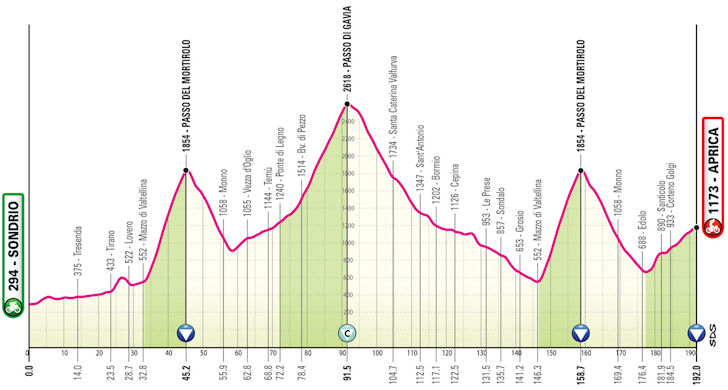
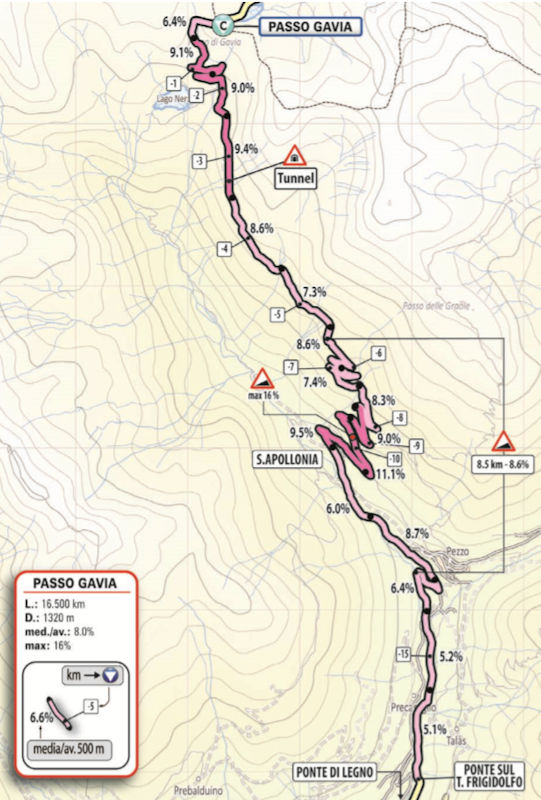
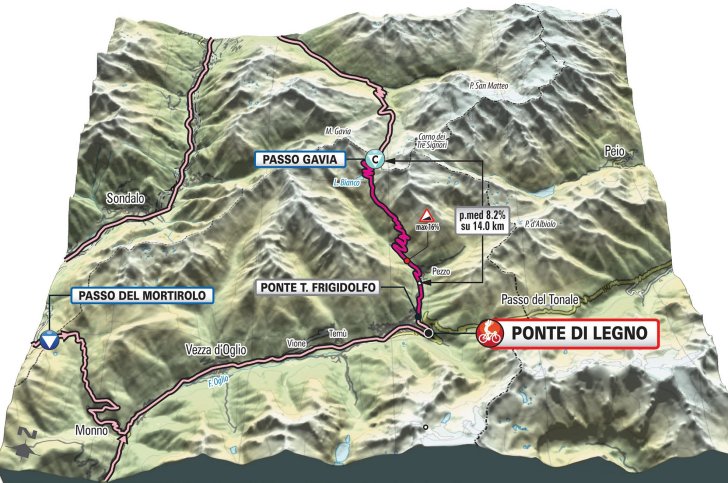
As always, the Giro’s toughest climbs feature in the final week. And things get off to quite a start with stage 16, the queen stage, which promises to be an absolute monster. The riders are to tackle the Mortirolo, Passo di Gavia, Mortirolo once again, before finishing with an uphill finale in Aprica. On both occassion, Mortirolo is climbed from Mazzo, its toughest side, which means 12.4 kilometres of lung-busting climbing at an average gradient of 10.5%. The Gavia, meanwhile, serves up another 16.5 kilometres of gruelling climbing at 8%.
A run-up at the Mortirolo before a finish in Aprica recreates the finale of 2015, when Mikel Landa soloed to victory on the final climb, a 13.9-kilometre ascent averaging 3.4%. The build-up was certainly tough that day, but nowhere near as brutal as thus year's queen stage, which serves up almost 6,000 metres of elevation gain.
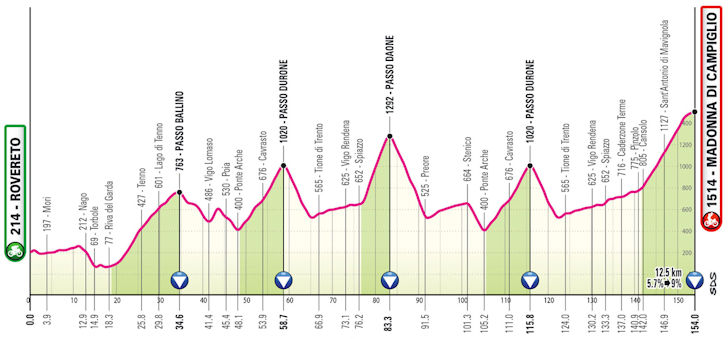
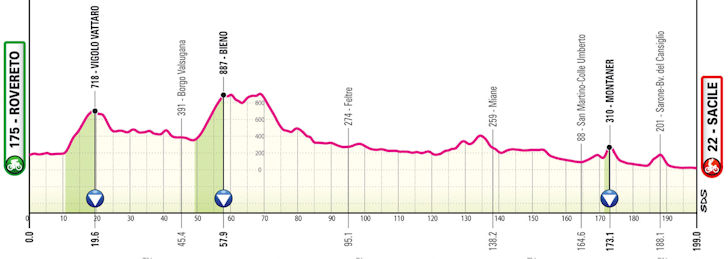
Stage 17 is flat affair from Chiari to Vò, where two small climbs precede a downhill finale, before stage 18 finishes uphill in Madonna di Campiglio. The Giro last visited the Dolomite resort in 2020, when Ben O'Connor soloed to victory from the breakaway. Stage 19 is then another hilly affair, starting in Rovereto and finishing in Sacile.
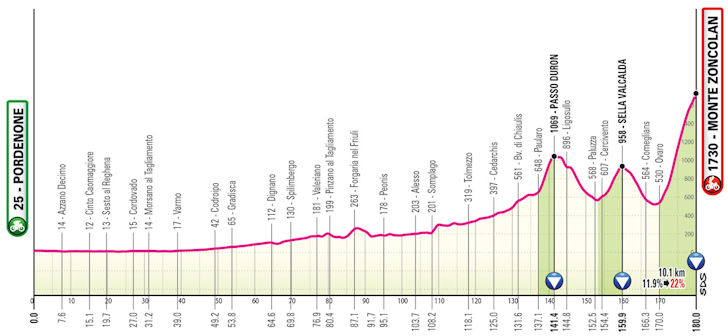
The Giro leaves the mountains with a bang, as stage 20 concludes with an ascent of Monte Zoncolan from Ovaro. In 2018, Chris Froome rediscovered his best form on those brutal slopes. He had looked a shadow of his former self up to that point in the race, but on the 10.1-kilometre climb averaging 11.9%, he rode solo to victory. A week later, he went on to win the Giro overall.
As has become customary in recent years, the first Grand Tour of the season will finish in Rome.
Interested in an ad-free version of Cyclingstage.com? To celebrate the announcement of the Giro route, we’re offering an annual subscription at the special price of €5 (regular price €10). If you’re interested, please leave a comment below.
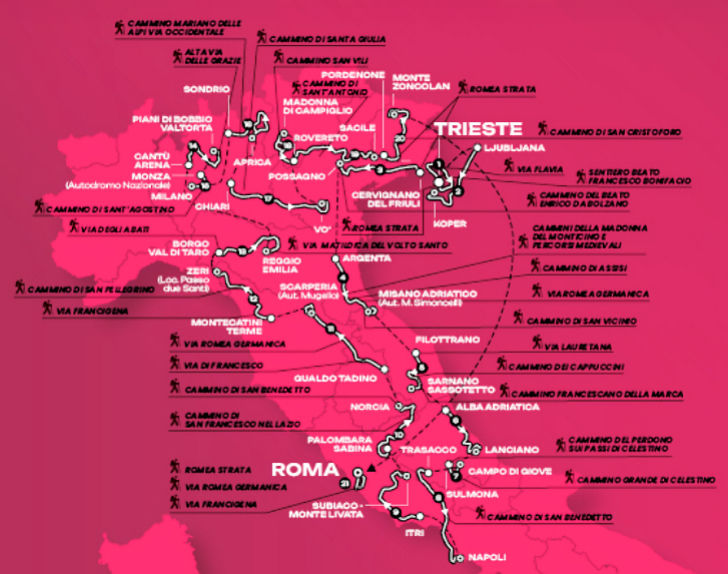
Giro d'Italia 2027: routes & profiles
Click the images to enlarge




Comment
3 comments
Vince Pelote
Is one of stages likely to be Siena
Ken
Where do we find maps of the individual stage routes? The Giro site only gives profiles.
Harmen Lustig
We will publish gpx files of the routes in the coming weeks.